We are an organisation made up of almost 300 innovators.
We pride ourselves on the skilled and talented people from varied backgrounds that make up our team – we harness the expertise, perspectives and connections of people of more than 40 nationalities, thereby bringing together a diversity of skills, experience and backgrounds.
SONIC (SmartRAN Open Network Interoperability Centre) Labs is a commercially-neutral, collaborative, environment for testing interoperability and integration of open, disaggregated...
Digital Catapult and Energy Systems Catapult have partnered through the GridFlex Programme, funded by Innovate UK, to accelerate the practical application of deep tech...
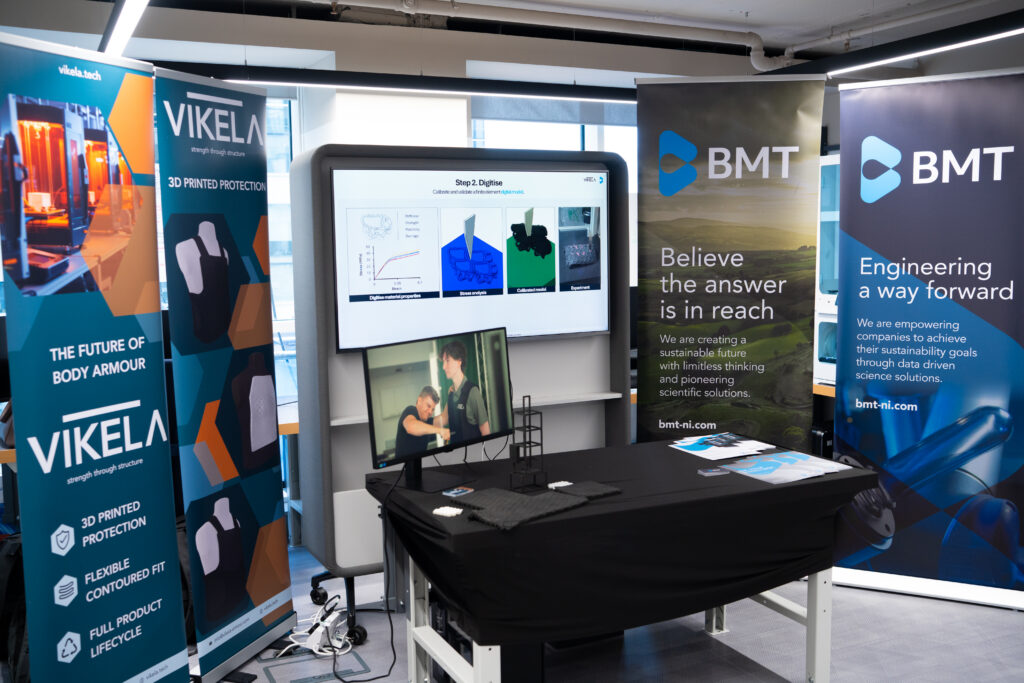
Delivered by Digital Catapult and funded by Belfast Region City Deal and Innovate UK, the UK Digital Twin Centre makes digital twins more accessible and meaningful in the UK. It actively enable industries and innovators to safely embrace, explore and realise their dynamic power.
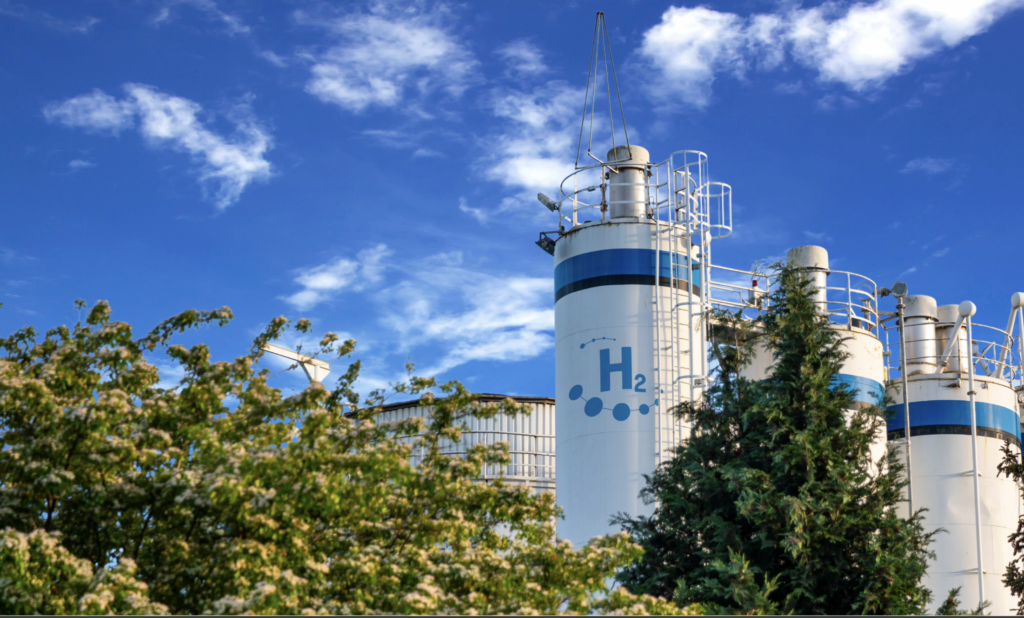
This report looks at the Green Hydrogen Certifier - an end-to-end demonstration
of a potential digital certification solution for hydrogen production...
In the 2024 Annual Impact Report, Digital Catapult shares highlights from the past year, demonstrating how we lead the way, shaping and de-risking early adoption of deep tech solutions.
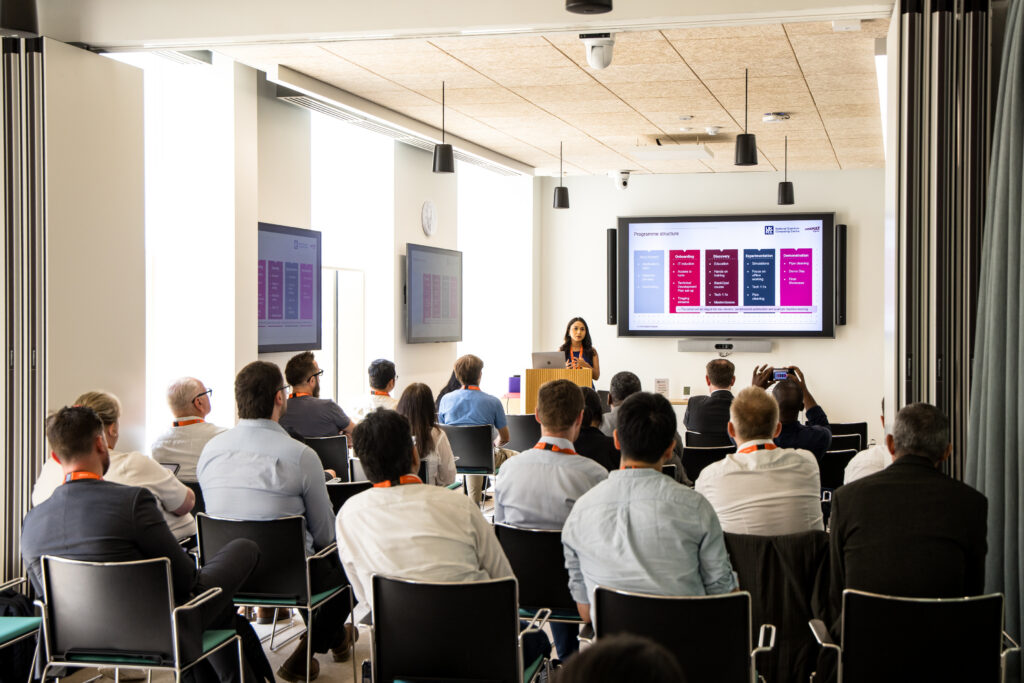
Join us for the Quantum Technology Access Programme (QTAP in partnership with NQCC’s SparQ Showcase, at Digital Catapult in London, where participants from the latest programme cohort will share how they have explored quantum technologies against real-world business challenges.
Creating acceleration programmes to support businesses.Helping them grow through mentorship, technology support, networking, and investment opportunities.
Applications are open to UK businesses for the Advanced Connectivity Technologies Growth Programme, supporting UK businesses looking to scale deep tech connectivity solutions across telecoms, satellite and semiconductor technologies.
Delivered by Digital Catapult and funded by Belfast Region City Deal and Innovate UK, the UK Digital Twin Centre makes digital twins more accessible and meaningful in the UK. It actively enable industries and innovators to safely embrace, explore and realise their dynamic power.
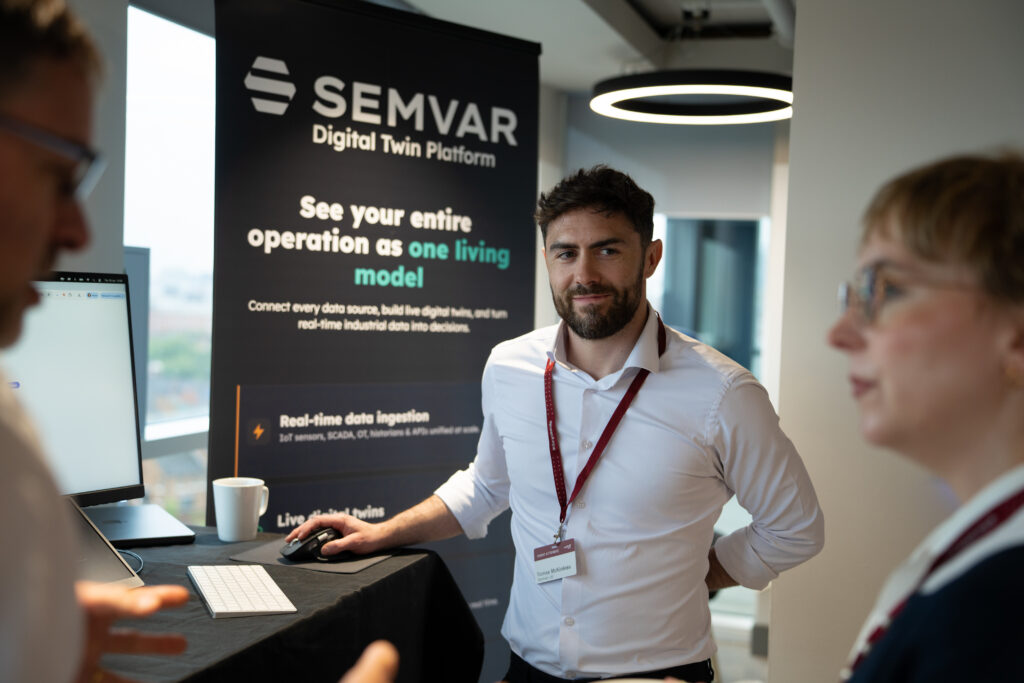
Discover how Semvar and Marine Zero worked together to harness digital innovation for maritime decarbonisation, using data-driven technologies to improve...
Join Digital Catapult, Satellite Applications Catapult and Semiconductor Catapult for this briefing webinar introducing the Advanced Connectivity Technologies Growth Programme.
Join us for the Quantum Technology Access Programme (QTAP in partnership with NQCC’s SparQ Showcase, at Digital Catapult in London, where participants from the latest programme cohort will share how they have explored quantum technologies against real-world business challenges.
Digital twins are transforming how organisations connect data, systems, and decision-making. To scale their impact, trustworthiness and security must be...
The 2025 Annual Impact Report highlights our successes over the past year, demonstrating how Digital Catapult is accelerating the practical application of deep tech to equip the UK to be future ready, and showcasing our impact across our primary areas of intervention.
Techstart Ventures, an early-stage technology investor, and Digital Catapult, the UK authority on advanced digital technology, have announced that Rubik Technologies has been awarded £75,000...
Digital Catapult > Looking back 10 years: from early R&D to UK AI success
Blog
Looking back 10 years: from early R&D to UK AI success
Posted 11 Nov 2026
Share
The long arc from Digital Catapult to Synthesia
Transformational companies do not materialise overnight.
More often than not deep tech businesses begin their journey with early technical exploration, partnership-building and patient capital. They often require long term investment, support and intensive R&D, before they can become an “overnight success story”.
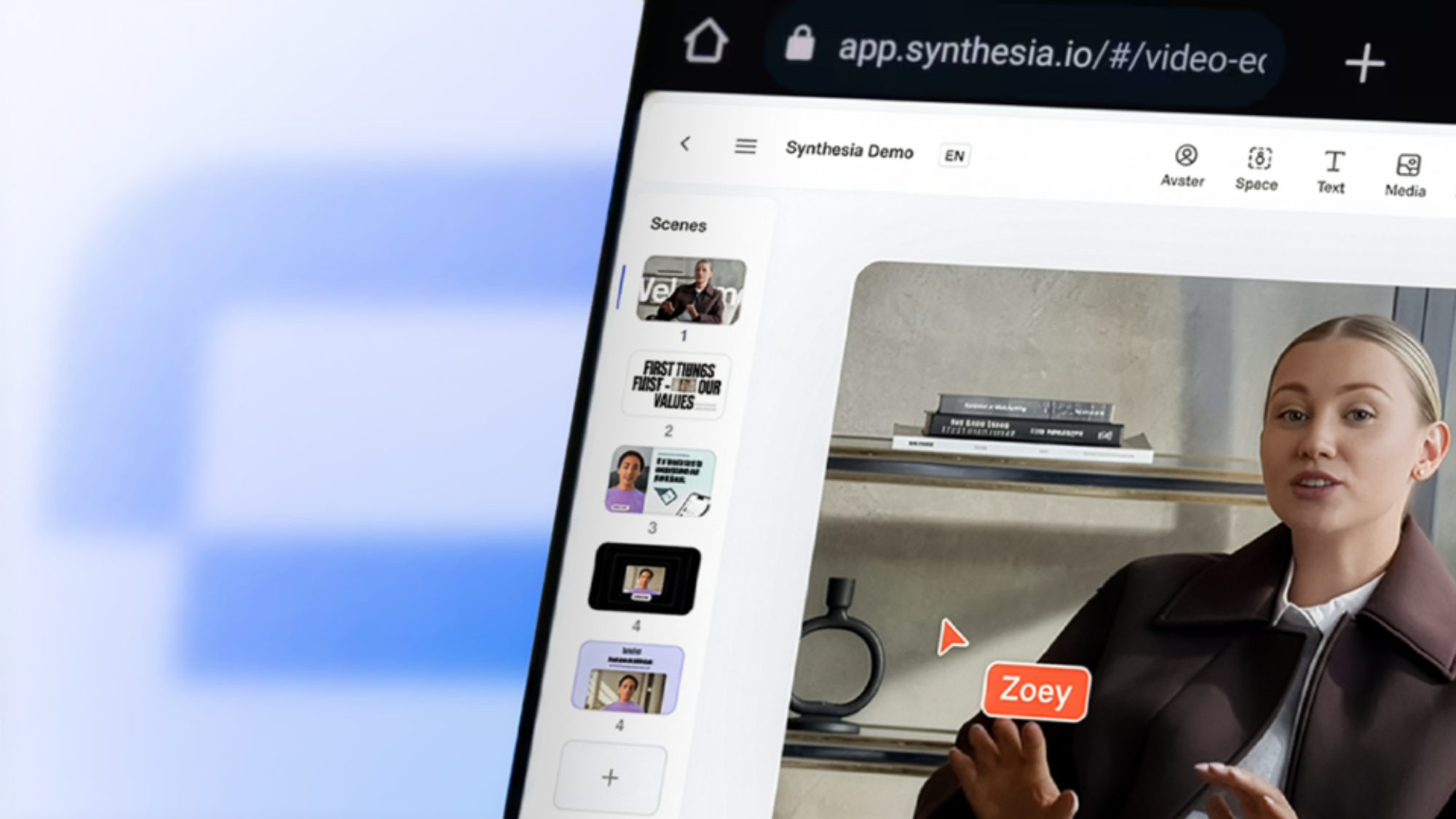
Synthesia is a strong example of that pattern. Founded in 2017, the company has gone on to become one of the UK’s best-known AI scale-ups, reaching unicorn status in 2023 and later raising a $180 million Series D at a $2.1 billion valuation in January 2025, followed by a $200 million Series E at a $4 billion valuation in January 2026.
The early days
For Digital Catapult, our connection to that story was at the very beginning.
In 2016, when much of the discussion around immersive technology was still centered on virtual reality (VR), Digital Catapult was examining where the next meaningful technical and commercial opportunities might lie. Motion capture was already well understood, but volumetric capture, by contrast, was still at the frontier. It was technically demanding, computationally intensive and, at the time, almost entirely absent from UK and European capability.
To help assess the market, Digital Catapult brought in specialist external expertise, including Victor Riparbelli – Synthesia’s future Co-Founder and CEO. I remember discussing with him the importance of identifying UK capability gaps, understanding who was advancing the field for 3D capture at a global level, and testing how the UK might build a distinctive position through future facing R&D infrastructure in the area. Through his work, a small number of organisations operating at the leading edge of this new wave of technologies were identified, including Microsoft. We brought them all together, creating connections that would prove important in shaping what came next.
A new Dimension – SME enabled R&D infrastructure
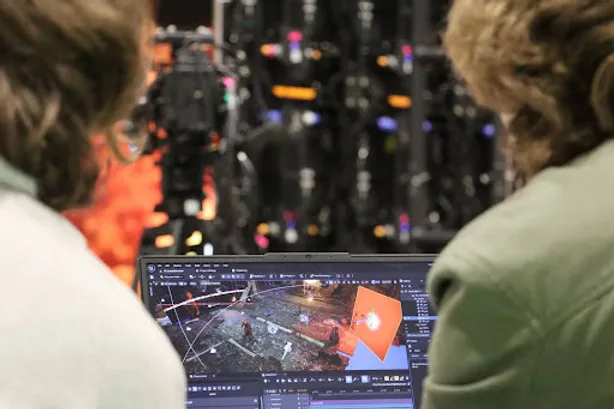
The result of that early exploration and discovery project was Dimension Studio, launched in 2017 by Digital Catapult with Hammerhead and Microsoft, and opening its doors in 2018. At launch, it was described as Europe’s most advanced volumetric and 3D capture studio, built using Microsoft Mixed Reality Capture technology and one of only a handful of facilities of its kind globally. Digital Catapult helped form the partnership, invested £1.5 million, and worked with Hammerhead on an operating model designed to combine R&D activity with a viable commercial business.
The significance of that model became a foundational sliding doors moment for the future of many of those involved. For those working on the facility itself, it created a new R&D capability to meet a growing and real market need, developing routes to commercial use cases through explorative business models. The gap in this area was highlighted in early 2018, when national treasure Sir David Attenborough had to film his Hold the World VR feature at Microsoft’s Mixed Reality Capture Studio in Redmond, USA – simply because this kind of capability was not yet available in the UK. Dimension opened its doors in London shortly after this, changing the landscape and giving the UK and Europe a transformative new infrastructure.
Unsurprisingly, early traction followed quickly. Dimension’s first wave of work included projects with Sky VR, while the studio went on to build a client roster spanning entertainment, sport, advertising and live events. For Digital Catapult, this early success helped us to establish a model for how new technical infrastructure could be created; not as a standalone laboratory disconnected from customers, but in partnership with a high-growth SME and with a route to commercial sustainability built in from the outset. That approach would later inform our wider work in advanced media production, new human machine interaction tools and our innovative model around Technology Access Programmes. Dimension itself went on to be acquired by the UK & US Headquartered experience agency, Journey in 2025.
Venture building – the creation of Synthesia
As Dimension launched, Victor Riparbelli’s attention had increasingly turned to the next frontier. He continued to engage with Digital Catapult on future-facing activity, including immersive content and adjacent creative technology opportunities. Over time, the focus shifted from capture to synthesis; from recording human performance to generating it. Those discussions sat alongside a broader set of connections across the ecosystem, including academia, and helped shape the context in which a new venture could emerge.
It was obvious early on that Victor had the vision for where this technology could go, identifying its possibilities and future applications ahead of many people starting to look seriously at AI.
Jeremy Silver
Former CEO, Digital Catapult
With this backdrop, Synthesia was founded in 2017 by Victor Riparbelli, Steffen Tjerrild, Professor Lourdes Agapito of UCL Computer Science, and Professor Matthias Niessner, now at the Technical University of Munich. The mix of entrepreneurial and research talent was central to the company’s direction. As Lourdes recalled in an interview with LDV Capital in 2020:
We met with Synthesia’s co-founders in 2017 through the Digital Catapult, which is a government organisation that wanted to build a 4D capture studio in London. We were involved in this process and then we started talking about our interest in creating content and in helping content creators in their process of synthesizing video. Victor Riparbelli, the CEO of the company, and Steffen Tjerrild, the COO and CFO, saw the technical side and knew how that could be exploited as a business. I came to this from much more of a scientific side, same as Matthias Niessner, the company’s fourth co-founder.
It’s good to be able to have people in the founding team who really know how to build a company and a product. They also know how to go out to investors. That’s been one of the keys – the fact that we had good science, good technology, and a fantastic business and entrepreneurship team that is passionate and knowledgeable about how to go about building a business around these products.
Professor Lourdes Agapito
UCL Computer Science
UCL’s public account of the company’s growth points directly to the role of Agapito’s research in 3D vision and the wider contribution of research-led innovation in building the business. Synthesia’s own account likewise continues to present Agapito and Niessner’s academic work as foundational to the company’s development, including Niessner’s seminal Face2Face project.
Further support from Innovate UK
Public innovation funding also played an important role in Synthesia’s early success. In 2017, the team received support from Innovate UK through the HARPC: High-Quality Facial Capture Unencumbered by Head Mounted Cameras project, alongside Dimension Studios and CAMERA, part of the University of Bath. Within this wider collaboration, Synthesia received funding that provided critical bootstrapping support and enabled close work with academic and industry partners. The project developed real-time facial performance capture in AR/VR, allowing lifelike digital characters to be controlled and interacted with live, reducing costs and unlocking new formats across screen and immersive media.
In 2018, Synthesia also secured funding through a feasibility study (VISIM), advancing highly expressive 3D facial modelling focused on lip dynamics. This enabled more realistic, emotionally rich video synthesis from standard video inputs, while sustaining vital collaboration between research and commercial application. The work underpinned Synthesia’s ability to scale photorealistic video generation and open new markets such as language dubbing – which the company continues to develop and refine today.
Synthesia has since highlighted Innovate UK’s early backing as instrumental to its growth, including in evidence to a House of Lords inquiry examining the barriers facing UK AI and Createch companies scaling to global success in 2024.
Synthesia Today
Synthesia’s growth trajectory illustrates how long these journeys can take. The company was founded in 2017, underwent a strategic pivot from media and entertainment to business use cases in 2019, became a unicorn in 2023, passed $100 million in annual recurring revenue in 2025, was valued at $4bn in 2026, and is today used by 90% of the Fortune 100.
Hurun’s Global Unicorn Index 2025 reports that startups take six years on average to reach unicorn status. In practice, the full arc is often longer in digital deep tech, where infrastructure, research translation, product development and market adoption all take time.
Synthesia’s focus now extends well beyond its origins in creative deep tech and synthetic media. It is an enterprise AI video platform, used by organisations of all sizes to create engaging video-based material from training, internal communications and operational text-based content, in over 140 languages and at scale.
The clearest sign of that evolution is the range of sectors now working with them. Synthesia may have been born from Creative Industries R&D, but it is used in manufacturing, healthcare and other operationally intensive and heavily regulated environments, where organisations need to train dispersed workforces, maintain consistency across sites and localise content quickly. This includes the likes of SAP, Merck, Electrolux, BD Rowa and Novelis, all of which point to the same pattern: AI video is not being used as a novelty, but as a practical infrastructure for technical training, compliance and operational communications.
Seen in that light, Synthesia’s story is also one of UK industrial digitalisation.
A business that emerged from research-led work in synthetic media is now serving UK ambitions in the next generation of industrial innovation, supporting organisations and global enterprises that need faster, more scalable ways to share knowledge. That is often how deep tech creates lasting value: not only by opening up new creative possibilities, but by becoming embedded in the routine but essential work of businesses across training, communication and productivity.
Synthesia’s next chapter is going one step further: from one-way AI video to conversational AI agents. This means turning enterprise knowledge into interactive experiences that help employees and people learn, act, and work better by letting them interact with video, ask questions, and practice their skills in a low-stake environment, with higher engagement and faster knowledge transfer than traditional training formats.
How Boldyn Networks uses interactive AI video to achieve 95% course completion rates
Boldyn Networks designs, builds, and operates shared network infrastructure across complex environments – from transport systems and stadiums to airports and smart cities. Headquartered in the UK, Boldyn is a global leader in digital infrastructure with a strong focus on innovation and customer-centric service.
Before using Synthesia, its L&D team spent significant time manually assembling disparate learning assets – a process that was neither efficient nor easy to update. With Synthesia, that changed entirely. As Jen Ruthven, Group Director of Learning, Career & Development, puts it, the platform enables the company to deliver content that is flexible, scalable, and editable on the spot in real time. The impact is significant: the team achieved 95% course completion rates, 75% month-on-month growth in content engagement, and four-star satisfaction ratings across its learning suite. For Boldyn, Synthesia has fundamentally transformed how its people learn.
How St. James’s Place made digital learning production more efficient and reduced costs
St. James’s Place, one of the UK’s leading wealth management firms, turned to Synthesia to solve a problem that will resonate with many regulated industries: how to keep training content accurate, engaging, and up to date when regulatory requirements shift on a quarterly basis? Traditional video production made that near-impossible – expensive to commission, slow to turnaround, and painful to update. With Synthesia, the L&D team can now script, produce, and publish compliance training videos in a fraction of the time, and make edits on demand without a single camera or studio booking. The results speak for themselves: production time has been cut by 50%, and costs have dropped by as much as 75%. As Beverley Hares, Head of Digital Learning Content, put it, meeting tight regulatory deadlines while maintaining accuracy is simply not achievable with traditional recorded video, and Synthesia changes that equation entirely.
What does this mean for UK ambitions in growing the companies of tomorrow?
For UK Industrial Strategy and Innovate UK’s new prospectus, there are some specific learnings and opportunities for us all to take from Synthesia’s success and growth.
If we want more globally significant companies in AI and other digital deep tech areas, we need more than isolated moments of early-stage enthusiasm. We need organisations that can identify technical shifts before they are obvious, back emerging capability, connect founders with researchers and partners, and stay committed long enough for those bets to mature. We need R&D infrastructure that is built to explore commercial and operational questions, rather than just academic & research ones.
Digital Catapult’s part in the Synthesia story was at the idea stage and linked to the role of Catapults providing access to leading edge R&D expertise and infrastructure. We created a commercially experimental environment for ideas, collaborations and business opportunities to flourish. Our ability to bring together entrepreneurial innovators, researchers and end users to spark something new may have been small, but it can be powerful when we get it right.
It is often at this early stage that the conditions are set for growth and scale, with the right technical insight, the right networks, the right technologies and technical experts, and the confidence to support work before the commercial outcome is clear.
Synthesia’s progress from early immersive media exploration to one of the UK’s leading AI companies working with companies from all sectors, is a reminder that successful deep-tech growth is cumulative.
It is built over years, not quarters, and it depends on patient support, as much as breakthrough ideas.
[12] Lourdes Agapito on Lourdes Agapito On Synthetic Media and Its Way To Transform The Film Industry, Online Shopping, and More – LDV Capital – August 2020 https://www.ldv.co/blog/women-leading-visual-tech-lourdes-agapito
Discover how Semvar and Marine Zero worked together to harness digital innovation for maritime decarbonisation, using data-driven technologies to improve…