







Digital Supply Chain Programme: Made Smarter Innovation | Digital Supply Chain Hub
Creating a virtual hub, data observatory and network of industrial living labs to optimise information flows across manufacturing supply chains.
As Open RAN moves from early adoption towards large-scale deployment, the industry faces a critical challenge: proving that complex, multi-vendor networks can deliver the performance, scalability and intelligence operators expect from modern 5G infrastructure.
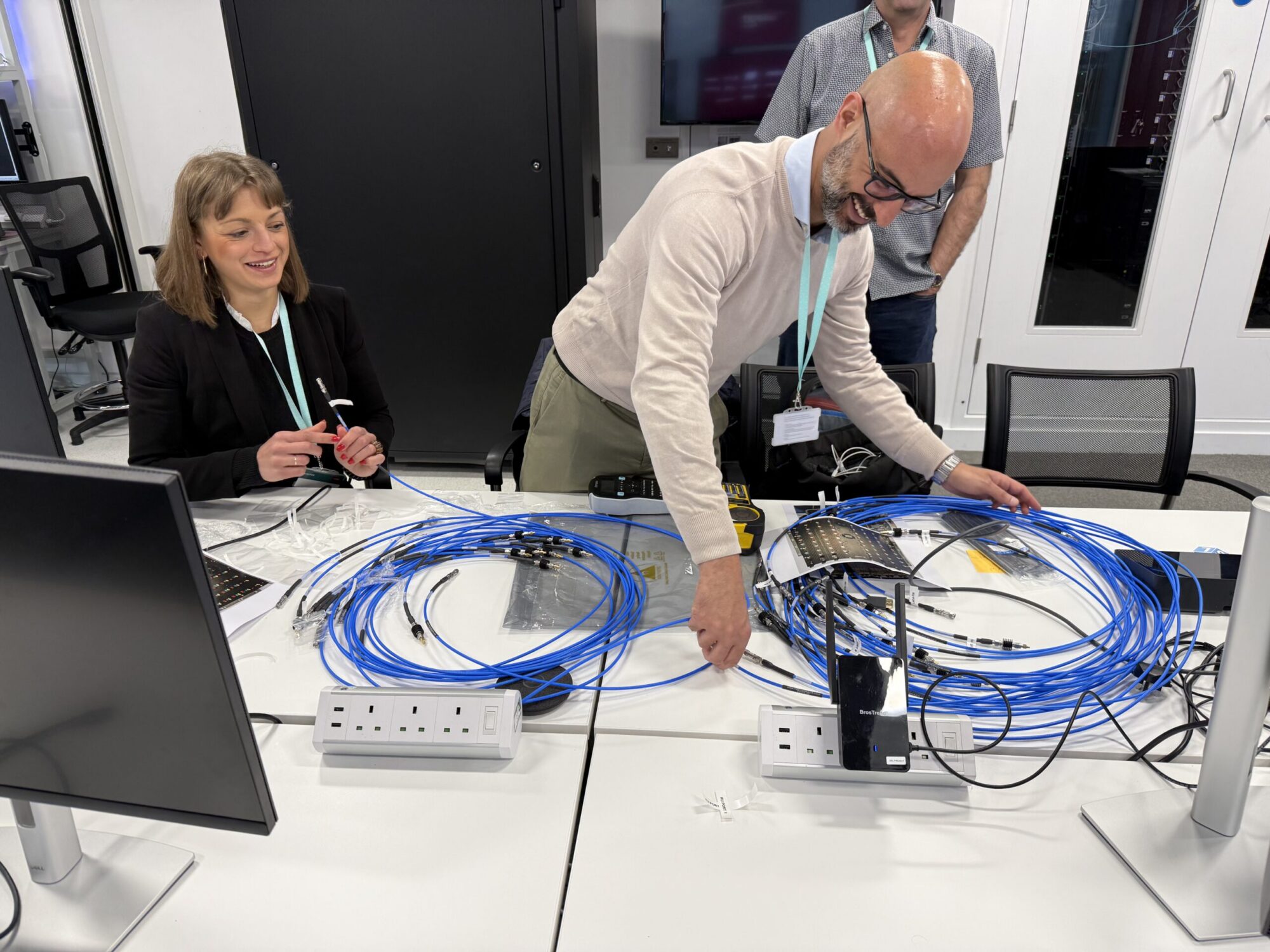
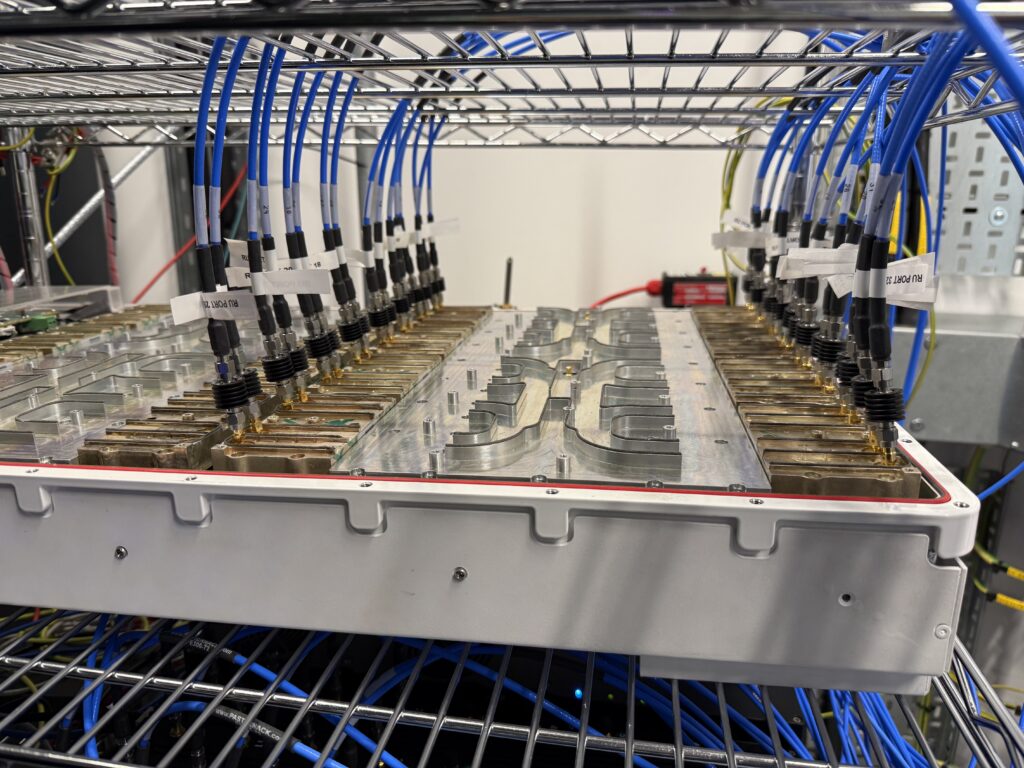
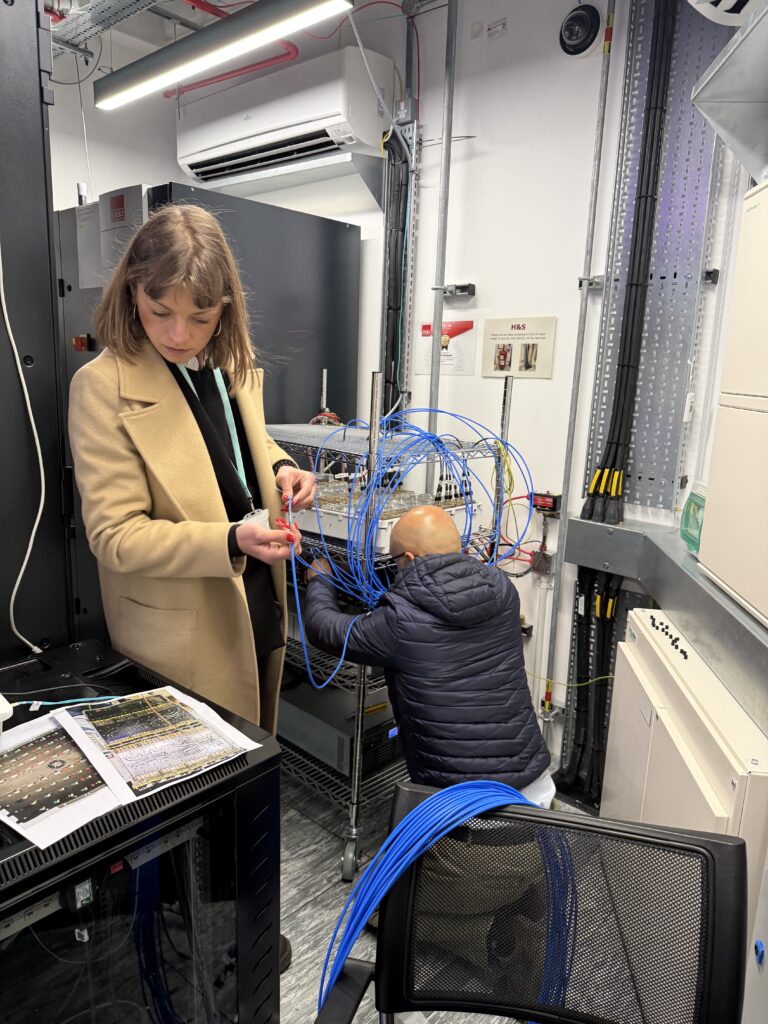
At the O-RAN Spring 2026 Plugfest, Digital Catapult took another major step towards answering that challenge. Hosted within Digital Catapult’s Open Networks Lab, the UK’s first Open Testing and Integration Centre (OTIC), the Plugfest brought together leading technology providers to validate advanced massive MIMO (mMIMO) capabilities in a fully integrated Open RAN environment. Building on the foundations established during the Autumn 2025 Plugfest, this year’s programme focused exclusively on one of the most demanding areas of Open RAN innovation: mMIMO beam detection, beamforming and beam management.
The result was a successful demonstration of advanced beam management capabilities at 32T32R scale, validating interoperability, performance and mobility procedures across a multi-vendor Open RAN deployment and bringing the industry one step closer to large-scale commercial adoption.
The Autumn 2025 Plugfest established the foundations for Digital Catapult’s mMIMO validation programme. Working alongside Keysight, G-REIGN and AmpliTech, the team successfully completed initial interoperability, fronthaul integration and lower-order MIMO validation, while identifying the technical challenges associated with integrating large-scale mMIMO systems within an Open RAN architecture. Spring 2026 represented the next phase of that journey.
Rather than focusing on interoperability alone, the objective was to validate advanced beam management functionality across a real multi-vendor Open RAN deployment, proving that intelligent beam selection, beam detection and beam switching could be achieved across disaggregated network components.
This progression reflects the wider maturity of the Open RAN ecosystem, where attention is increasingly shifting from proving connectivity towards validating real-world performance and operational readiness.
Digital Catapult convened a collaborative ecosystem of industry-leading partners to deliver the testing scenario:
Together, the partners integrated a complete Open RAN stack combining a real physical mMIMO radio unit, real distributed and centralised units, beam detection capabilities and advanced UE emulation. This type of collaborative validation is essential to accelerating Open RAN adoption.
Massive MIMO is one of the most important technologies underpinning 5G performance. By dynamically steering radio energy towards users through intelligent beamforming, mMIMO dramatically improves coverage, capacity and spectral efficiency. However, implementing these capabilities within a disaggregated Open RAN architecture remains one of the industry’s most complex challenges.
At the Spring 2026 Plugfest, Digital Catapult and its partners successfully scaled testing from the earlier lower-order MIMO configurations to a 32T32R deployment, representing a significant step towards full 64T64R capability.
The testing programme focused on three critical areas:
The successful completion of these tests demonstrated that advanced mMIMO functionality can be delivered within an open, multi-vendor environment while maintaining strong performance and operational stability.
The Plugfest produced strong technical results across both single-user and multi-user scenarios, achieving 180 Mbps on the uplink and 600 Mbps on the downlink, though the focus of the Plugfest was mainly on the mMIMO system setup, configuration and functional testing.
The team also successfully validated beam switching procedures, demonstrating that a user device could transition between beam sets based on network instructions while maintaining service continuity. These results represent an important milestone in proving that advanced Open RAN beam management capabilities can operate effectively across disaggregated, multi-vendor architectures.
One of the most valuable outcomes of every Plugfest is the opportunity to identify and solve real-world deployment challenges before they reach commercial networks. As expected, the Spring 2026 Plugfest revealed several areas requiring significant engineering effort, including:
Importantly, the collaborative nature of the Plugfest enabled partners to rapidly identify workarounds, refine configurations and progress testing objectives within the available timeframe. These learnings are already informing future development activities and helping to accelerate readiness for larger-scale deployments.
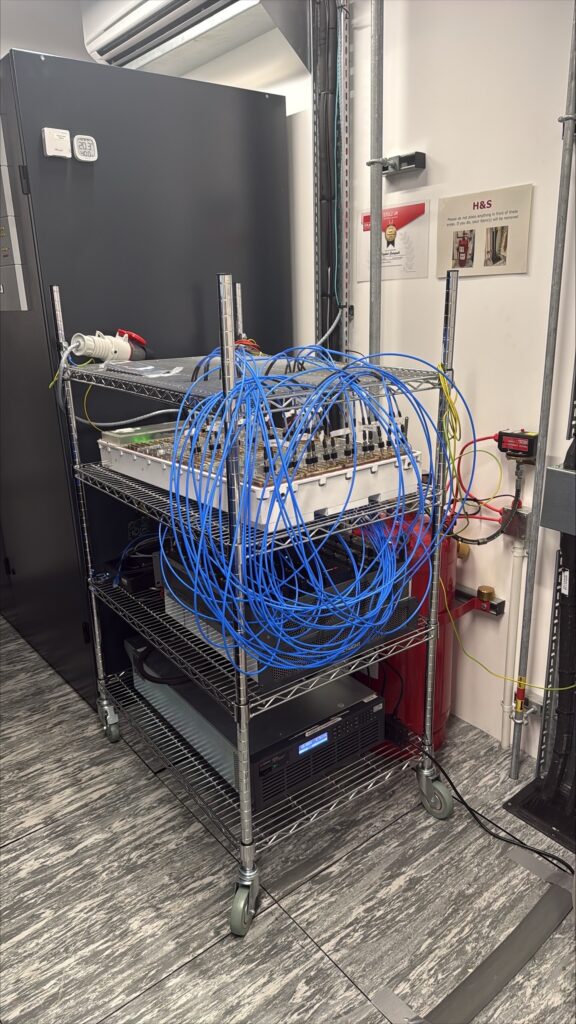
One of the clearest messages from this Plugfest is that successful Open RAN deployment requires more than standards compliance. System setup, integration and optimisation continued to account for the majority of Plugfest effort, with approximately 70–80% of activity focused on preparing and validating multi-vendor interoperability before formal testing could begin. This highlights the increasingly important role played by OTICs and trusted testing facilities such as Digital Catapult’s Open Networks Lab. By providing neutral infrastructure, technical expertise and collaborative environments, OTICs reduce deployment risk, accelerate ecosystem learning and enable vendors and operators to tackle complex integration challenges before commercial rollout.
The Spring 2026 Plugfest demonstrated how far Open RAN mMIMO technology has progressed in just six months. The programme successfully evolved from initial integration activities to validating advanced beam management and mobility capabilities at significantly greater scale. It also reinforced the value of industry collaboration in accelerating the practical adoption of Open RAN technologies.
While full 64T64R integration remains a future objective, the progress achieved during Spring 2026 represents a significant milestone for both Digital Catapult and the wider Open RAN ecosystem.
As operators prepare for increasingly demanding 5G and future 6G deployments, advanced mMIMO capabilities will be critical to delivering the capacity, efficiency and performance required by next-generation networks. At Digital Catapult, we are proud to work alongside industry partners to accelerate this journey, helping transform Open RAN from a promising concept into a deployable reality.
If you would like to learn more about Digital Catapult’s future connectivity programmes and Open RAN testing capabilities, get in touch with our team here.

Join Digital Catapult for this webinar that will explore how sovereign telecom datasets are enabling the next wave of AI-driven…


Join Digital Catapult, Satellite Applications Catapult and Semiconductor Catapult for this briefing webinar introducing the Advanced Connectivity Technologies Growth Programme.

Applications are open to UK businesses for the Advanced Connectivity Technologies Growth Programme, supporting UK businesses looking to scale deep…

Build practical photonics capability through hands-on training in PIC design, simulation, and prototyping, with access to Smart Nano NI infrastructure…

Join Digital Catapult and the UK Agri-Tech Centre on 17 November 2026 to explore how AI can tackle key agricultural…

Join Energy Systems Catapult and Digital Catapult on 2 November 2026 to explore how AI can accelerate the UK’s transition…

Join us for this insight-led webinar designed specifically for AI SMEs seeking to understand how existing AI solutions can be…

Join the UK Digital Twin Centre for a series of practical webinars exploring the technologies behind digital twins. Hear from…
Join Digital Catapult for this webinar that will explore how sovereign telecom datasets are enabling the next wave of AI-driven…
Join Digital Catapult, Satellite Applications Catapult and Semiconductor Catapult for this briefing webinar introducing the Advanced Connectivity Technologies Growth Programme.
Applications are open to UK businesses for the Advanced Connectivity Technologies Growth Programme, supporting UK businesses looking to scale deep…
Build practical photonics capability through hands-on training in PIC design, simulation, and prototyping, with access to Smart Nano NI infrastructure…
Join Digital Catapult and the UK Agri-Tech Centre on 17 November 2026 to explore how AI can tackle key agricultural…
Join Energy Systems Catapult and Digital Catapult on 2 November 2026 to explore how AI can accelerate the UK’s transition…
Join us for this insight-led webinar designed specifically for AI SMEs seeking to understand how existing AI solutions can be…
Join the UK Digital Twin Centre for a series of practical webinars exploring the technologies behind digital twins. Hear from…