





Digital Supply Chain Programme: Made Smarter Innovation | Digital Supply Chain Hub
Creating a virtual hub, data observatory and network of industrial living labs to optimise information flows across manufacturing supply chains.
Date: 28 October 2026 14:00 - 4 November 2027 12:00

Discover the technologies helping organisations put digital twins into practice through a series of online sessions featuring the technology providers involved in the Digital Twin Technology Access Programme (TAP), delivered by Digital Catapult’s UK Digital Twin Centre.
Across three webinars, specialists from MathWorks, CADFEM and Ansys, part of Synopsys, Cadence, and the UK Digital Twin Centre will explore different technologies and approaches that can support the development and application of digital twins.
Each session will focus on a different area of technology, from engineering simulation and physical system modelling to the tools and approaches helping organisations better understand, design and optimise real-world systems.
Whether you are considering applying to the Technology Access Programme, exploring a particular technology or simply want to better understand what digital twins could mean for your organisation, the series will provide practical insights, examples and guidance from industry experts.
You can attend one webinar or join the full series depending on the technologies and topics most relevant to you.
28 October – MathWorks | 3 November – CADFEM & Ansys, part of Synopsys | 4 November – Cadence
Brought to you by the UK Digital Twin Centre in conjunction with MathWorks.
Join the UK Digital Twin Centre and MathWorks for a practical introduction to Simscape, exploring how you can model and simulate real-world physical systems using an intuitive physical network approach.
The session will demonstrate how system-level models can be built by assembling interconnected components, without the need to manually derive complex equations. You’ll see how different levels of model fidelity can be used to match your engineering objectives, helping you balance speed and accuracy throughout the development process.
Whether you are new to physical system modelling or looking to streamline your existing engineering workflows, this webinar will provide practical insights and guidance to help you get started with Simscape.
This session will help you understand how physical system modelling and simulation can support your engineering and product development workflows.
You will:
This webinar is particularly relevant to:
It will be suitable for those who are new to physical system modelling, as well as engineers looking to develop or streamline their existing modelling and simulation workflows.
The session will cover:
Brought to you by the UK Digital Twin Centre in conjunction with CADFEM and Ansys, part of Synopsys.
Join the UK Digital Twin Centre for Digital Twins: From Digital Engineering to Business Impact, an online session exploring how organisations are building connected digital environments that bring together engineering tools, physics-based models and real-world sensor data.
Hear from experts at CADFEM and Ansys, part of Synopsys, as well as Digital Catapult, about how digital twins can help organisations make better engineering decisions, accelerate development, reduce costs and risk, and improve performance across the product lifecycle. Using practical examples, the session will explore how leading organisations are moving from digital engineering and simulation to connected, operational digital twins and how these approaches can be applied to your own organisation.
The session will also introduce the Digital Twin Centre Technology Access Programme (TAP), which provides eligible UK businesses with an opportunity to experiment with industry-standard digital twin technologies and explore how they could be applied to their own challenges and use cases.
If you are looking to make better use of digital engineering, simulation or operational data, this session will help you understand what digital twins could mean for your organisation.
You will:
This event is open to organisations across all industries and will be particularly relevant to organisations, businesses or individuals looking to:
The session will explore the journey from digital engineering to business impact, including:
Edward Carman | Synopsys
Edward Carman is a Lead Application Engineer at Synopsys, specialising in digital twin and system simulation solutions. He helps organisations connect physics-based simulation models with operational data to enable simulation-driven decision-making.
His interests include reduced-order modelling, system-level simulation and making advanced engineering simulation accessible at scale.
Christian Abramowski | CADFEM
Christian Abramowski is a Digital Twin Manager at CADFEM, with a focus on turning simulation technologies into practical solutions. He is particularly interested in physics-based simulations and virtual sensors, which are central to digital twin development. Christian also works with engineers and teams to build skills and confidence in digital engineering, helping them connect the real and virtual worlds through simulation-driven engineering, from product development to real-time digital twins.
Oisin Harrington | Digital Catapult
Oisin Harrington is an Innovation Manager at Digital Catapult and is part of the UK Digital Twin Centre team. He works across industry, academia and government to accelerate the adoption of advanced technologies, helping businesses move from concept to real-world value. His background spans applied AI, digital twins and industrial innovation, with a focus on making deep tech more accessible and meaningful across sectors.
Brought to you by the UK Digital Twin Centre in conjunction with Cadence.
Designing reliable, efficient, and high-performing rotating machinery has never been more challenging. Whether you are developing next-generation automotive drivetrains, aerospace transmission systems, energy equipment, rail systems, marine propulsion, industrial machinery, or defence applications, the ability to predict system performance early in the design process is essential.
Join Cadence and the UK Digital Twin Centre for an exclusive one-hour webinar introducing Romax, Cadence’s industry-leading platform for the design, analysis, and optimization of rotating machinery and driveline systems. Romax supports engineers throughout the product development process, from concept development through validation, enabling deeper insight into durability, efficiency, NVH, bearing performance, gear behaviour, and overall system dynamics.
During this session, our experts will provide an overview of the Romax platform, demonstrate key workflows, and showcase real-world application examples from across multiple industries. Representatives from Digital Catapult will introduce the UK Digital Twin Centre Technology Access Programme and provide information on how they have enabled partners to adopt emerging technologies and turn them into practical commercial solutions. Attendees will also have the opportunity to engage directly with subject matter experts during a live Q&A session.
This webinar is ideal for:
Whether you are new to Romax or looking to understand how advanced simulation can support your development programmes, this session will provide valuable insights.
The Digital Twin Technology Access Programme (TAP) gives UK businesses an opportunity to experiment with industry-standard technologies and explore how digital twin approaches could be applied to their own industry, challenges and use cases.
Through the programme, successful applicants can access technology from leading vendors alongside training and ongoing support. Available technologies include solutions from CADFEM, MathWorks, Cadence and more to follow.
Find out more about the programme and how to apply during the webinar or via our website here.


Join the UK Digital Twin Centre for a series of practical webinars exploring the technologies behind digital twins. Hear from…
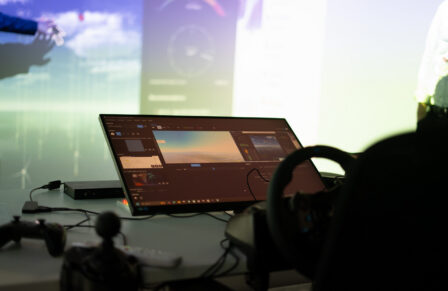
Want to understand how digital twin technology could support your organisation? Apply to the Digital Twin Technology Access Programme to…

Have you identified a potential use case for digital twin technologies, but still have an important question to answer? Apply…