





Digital Supply Chain Programme: Made Smarter Innovation | Digital Supply Chain Hub
Creating a virtual hub, data observatory and network of industrial living labs to optimise information flows across manufacturing supply chains.
Date: 25 September 2026 10:30 - 15:30
Register by: Wednesday 23 September 2026

AI is increasingly being developed and deployed as an accelerator of the domestic energy transition towards greener, healthier, and more affordable homes.
Deep tech including AI and digital twins holds promise for communities to better manage energy use, supporting more sustainable and collaborative ways of living. It can improve understanding of how homes perform in practice, where energy use can be optimised, which forms of retrofit are most appropriate, and how local energy systems can become more flexible and equitable. Across the built-environment sector, businesses are also developing new ways to harness insights generated by data-driven energy solutions. This creates opportunities for innovation and growth while addressing energy security, affordability, equity and net-zero goals.
Significant risks and uncertainties remain. This workshop brings together participants from industry, policy, and academia to explore the conditions under which digital innovation can succeed. Building on recent empirical research with communities in and around London, we will share insight into how digital systems can make the greatest practical contribution to decarbonisation, how emerging solutions can be tested and de-risked, and how policy, governance, and cross-sector collaboration can accelerate their responsible adoption.
This event is aimed at startups and scaleups developing digital solutions for energy, housing and the built environment, and will also be of interest to established technology businesses, energy and housing organisations, policymakers and local authorities, community energy groups, and researchers interested in accelerating the responsible application of deep tech for domestic decarbonisation.
Participants will have the opportunity to:
Agenda
10:45 – Coffee and informal networking
11:00 – Welcome and introductions
An introduction to Digital Catapult and the Sustainable AI Futures programme, followed by an overview of Kyrill Potapov’s research into human-centred AI for community energy.
Speakers:
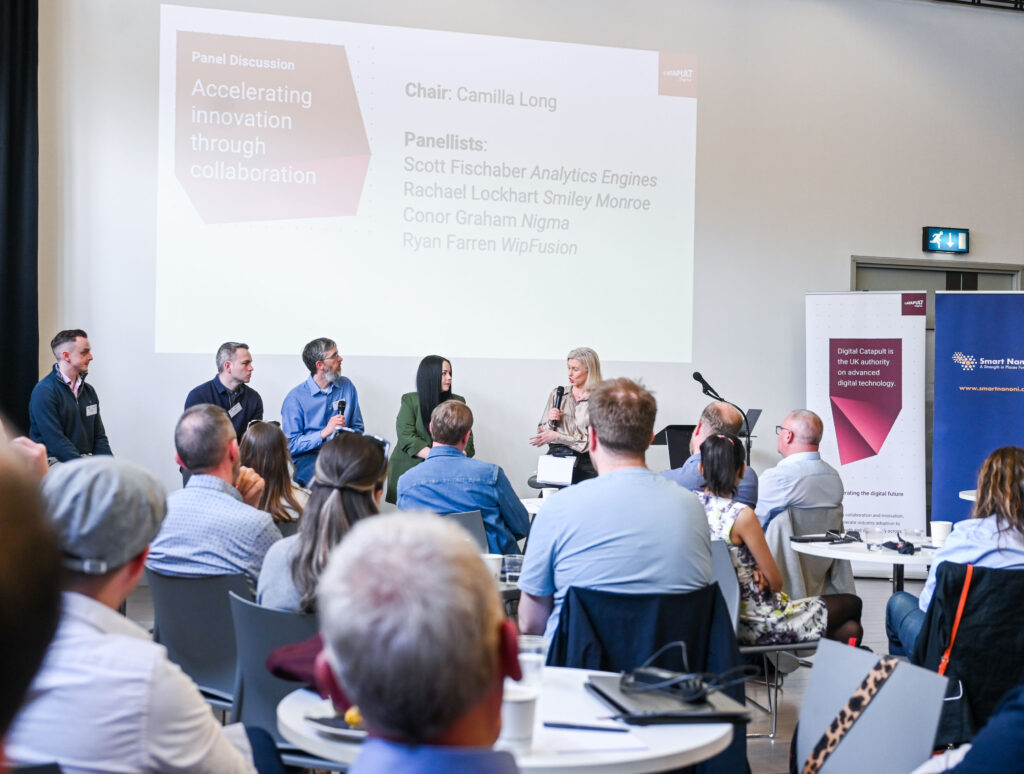
11:30 – Panel: AI and innovation in home energy
Mapping the current policy and innovation landscape around AI, data, energy, and domestic decarbonisation — followed by audience questions and discussion. We will hear from industry, policy, and academia.
Chair: Rachel Rayns, Head of Technology Solutions – Digital Catapult
Speakers:
12:15 – Activity 1: Exploring AI-mediated community energy
13:00 – Lunch
13:30 – Activity 2: Who models the models? AI in future policy contexts
14:15 – Activity 3: Trying out the AI and Energy toolkit
15:00 – Final discussion and next steps
15:45 – Finish
—–
The Catapult may take photographs and/or videos at the physical event, which may be used in general promotional material recording or relating to the event, including use with websites, emails, social media and tangible literature. CCTV is also in operation in our premises. If you have any concerns relating to this, please contact the events coordinator at the event. For more information on Catapult’s use of your personal details, please see our Legal and Privacy Terms tab and our Privacy Policy.
Data Protection:
Catapult is hosting this event and is the data controller for your personal data. Catapult is responsible to you for how it stores, uses and processes your personal data in accordance with our privacy policy which can be found at https://www.digicatapult.org.uk/legal/privacy-policy/
Any data processors will only process your personal data on our instructions and for the purpose defined below.
Catapult may take photographs and/or video at the physical event, which may be used in general promotional material recording or relating to the event, including use with websites, emails, social media and tangible literature. If you have any concerns relating to this, please contact the events coordinator at the event.
Catapult may also use your submitted information for the purposes of organising and operating the event, related post event and dissemination activities, and assessing the impact of the event. Catapult may also contact you for feedback or research purposes. If you’ve signed up to allow us to stay in contact, we may also contact you regarding other activities and events they hope to be of interest to you. Where a programme, facility or event sponsor has been named, we may also pass your information to such sponsor for the same uses as Catapult in relation to the event.
By attending the event, you agree to Catapult collecting and using your personal data in the ways, for the purpose(s) and for the period defined above.
If you are applying on behalf of another person, you are confirming their acknowledgement and agreement to these terms.
You may at any time send a request to Catapult at [email protected] to access, rectify, erase, restrict processing or object to the processing your personal data.
Terms and Conditions:
Notice of admission: Digital Catapult (DC) is private property and admission to DC is by invitation only. We reserve the right to refuse admission to DC or to parts of DC to any person, or to require a person to leave DC, if his or her conduct or presence is considered by an officer of DC to be causing or liable to cause annoyance, endanger/be liable to endanger the exhibits, fabric of the building or be otherwise undesirable.
Your Property: We reserve the right to refuse to allow any item to be brought into DC, or to inspect any item. No item may be left unattended anywhere in DC. We reserve the right to deal with any unattended items as we deem appropriate, and accept no liability for damage which may be caused in consequence. We accept no responsibility for any loss or damage sustained by items left in the lockers, or cloakrooms, other than loss or damage caused by our negligence or that of our staff. You agree that the organisers may use your contributions for, without limitation, creating and publishing material relating to the event, but no contribution will be personally attributed in materials without explicit consent. We reserve the right to use delegate participation in our post event activities.
Enforcement: Employees of the Catapult are authorised by us to require compliance with these conditions.
If you are applying on behalf of another person, you are confirming their consent to these terms and the privacy terms.
Any comments or complaints about this event should be sent to [email protected], with the subject line “COMPLAINT” and dated.

Accelerating UK businesses with high potential to scale across Telecoms, Satellite, and Semiconductor Innovation.
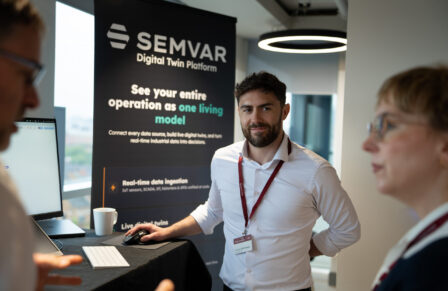
Discover how Semvar and Marine Zero worked together to harness digital innovation for maritime decarbonisation, using data-driven technologies to improve…
Learn how Deep Tek is supporting businesses, researchers and innovators to turn cutting-edge ideas into real-world opportunities and economic growth.
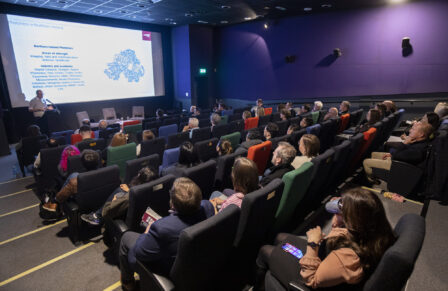
Join us at Day of Photonics 2026 taking place in Hilton Hotel, Belfast. The event will explore how Northern Ireland’s…

Have you identified a potential use case for digital twin technologies, but still have an important question to answer? Apply…
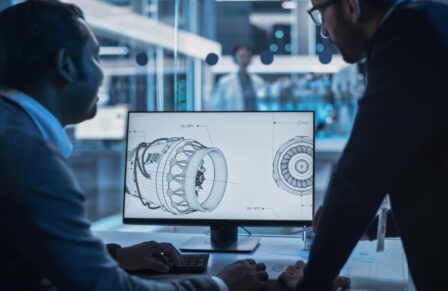
BusbySim and Flyer AI used a live aerospace digital twin to cut months of safety engineering work to days, producing…
Digital Catapult has launched its latest Industry Challenge Led Accelerator through the UK Digital Twin Centre, bringing together industry leaders…
Turn your innovation into a digital twin solution for a real industry challenge. Join the UK Digital Twin Centre’s nine-month…

Join us for Connected by Digital Catapult: Where innovation meets opportunity, an afternoon bringing together ambitious technology businesses, industry leaders…

Join Digital Catapult’s 11-month accelerator for academics and RTOs, developing solutions to real Digital Twin challenges.