






Digital Supply Chain Programme: Made Smarter Innovation | Digital Supply Chain Hub
Creating a virtual hub, data observatory and network of industrial living labs to optimise information flows across manufacturing supply chains.

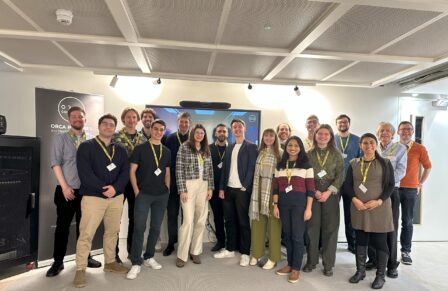
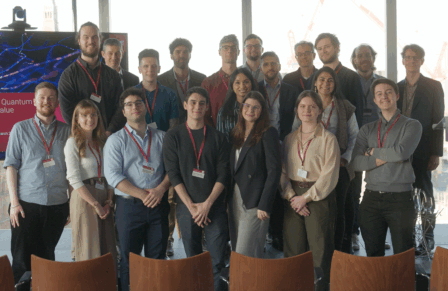
Digital Catapult has today welcomed eleven leading organisations to the third cohort of its Quantum Technology Access Programme (QTAP), delivered in collaboration with the National Quantum Computing Centre’s (NQCC) SparQ programme. Designed to accelerate the practical application of quantum innovation in industry, the cohort includes NatWest, the Rail Safety and Standards Board (RSSB), and Health Innovation North West Coast, part of the UK’s Health Innovation Network.
For the first time, the programme will apply quantum innovation to financial services and banking operations. NatWest will explore how quantum solutions could help detect fraud and illicit activity across large transaction networks, while CTA Fintech Solutions will examine cross-system optimisation of legacy-to-cloud transaction flows to improve cost efficiency and strengthen resilience in highly regulated environments. This focus on financial services reflects growing demand for quantum innovation and its role in building the UK’s sovereign capability while identifying new practical use cases for the technology.
One novel use case set to be explored through the programme will apply quantum computing to improve diagnostic modelling, treatment pathways and outcome forecasting for thrombotic thrombocytopenic purpura (TTP), a rare and life-threatening blood disorder considered a medical emergency. Through its participation, Health Innovation North West Coast aims to improve health and care outcomes for patients with TTP, supported by innovation and technology consultancy and access to ORCA Computing’s PT-2 quantum computer.
The programme will also trial and validate use cases across defence and security, supply chains and logistics, and transport and infrastructure, demonstrating the potential of quantum innovation across UK industry and its role in supporting the UK’s Modern Industrial Strategy. The latest cohort will demonstrate how quantum as a frontier technology can be applied to all the high-growth sectors outlined in the Industrial Strategy, underpinning economic growth. QTAP provides UK-based companies with a guided pathway to understand quantum technologies, assess their sector-specific value, and move from concept to practical application through expert guidance and experimentation.
Quantum Computing is no longer a theoretical concept but a technology that is demonstrating its potential value through a variety of industrial and commercial applications. The UK’s sovereign quantum capability is world-leading, but to maintain this, it’s critical to demonstrate real-world business use cases. This is why our work here in partnership with NQCC is vital, demystifying quantum innovation, and demonstrating how it can drive commercial success for those that embrace it. Quantum adoption cannot be done in isolation, but in bridging the gap between quantum experts, experienced technologists, and industry leaders. As such, I’m excited to see the novel solutions trialled and validated by our new cohort on a real quantum computer deployed at NQCC, which will translate deep tech into a commercial reality.
Paul Ceely Director of Technology Strategy at Digital Catapult
Through SparQ, we’re helping organisations move towards practical exploration of quantum computing. This cohort demonstrates growing confidence in quantum computing across UK industry, building the expertise, evidence and partnerships needed to accelerate responsible adoption and strengthen the UK’s quantum capabilities.
Dr Simon Plant Deputy Director for Innovation, National Quantum Computing Centre (NQCC)
Previous participants include Vodafone, Airbus, Rolls-Royce, the Port of Dover and the UK Atomic Energy Authority. Now in its third year, the programme’s latest phase will combine Digital Catapult’s expertise with the NQCC’s expanding national capability in quantum computing and testbeds. The cohort will explore two high-impact quantum use case streams: combinatorial optimisation, addressing challenges such as logistics, resource allocation and scheduling; and quantum machine learning, focused on supporting next-generation data analysis and pattern discovery.
The programme will run until February 2027, supporting new commercial and collaborative partnerships that will help advance quantum innovation across UK industry. This includes continued collaboration with NQCC and technical partner ORCA Computing, enabling deep tech companies to scale across the UK economy.
To learn more about the cohort’s progress and our work with NQCC and ORCA Computing, sign up to the newsletter here.
Sector leaders join quantum innovation programme to drive UK industrial transformation

Consumer-Led Flexibility (CLF) has the potential to lower energy bills, improve services, and accelerate the UK’s transition to a resilient,…

Learn how Viasat investigated quantum computing to optimise its satellite telecoms network.

Learn how SIMULEX investigated quantum computing to optimise energy networks, including hydrogen storage.
Separating opportunity from hype to understand industry challenges that may be best solved by quantum computing.

Discover a detailed examination of the UK’s evolving energy system, emphasising the critical role of flexibility, coordinated innovation and long-term…
ORCA Computing partnered with Digital Catapult to offer tailored support and access to quantum computing
Vodafone explored quantum computing’s potential to optimise its telecoms network as part of our Quantum Technology Access Programme.

Digital Catapult, a deep tech innovation organisation, is driving the development and deployment of open and future networks across the…