






Digital Supply Chain Programme: Made Smarter Innovation | Digital Supply Chain Hub
Creating a virtual hub, data observatory and network of industrial living labs to optimise information flows across manufacturing supply chains.
The UK Digital Twin Centre has today announced a new cohort of academic-led research and development projects, bringing together leading UK institutions to tackle key challenges in the development and deployment of digital twin technologies.
The Digital Twin Academic R&D Accelerator supports collaborative, high-impact R&D between academia and industry, focused on accelerating the adoption of scalable, secure and trustworthy digital twins across sectors including aerospace, defence and maritime. The Alan Turing Institute and Cranfield University have joined the first programme as part of wider efforts to strengthen the UK’s leadership in digital twin technologies, foster deeper collaborations and supporting the development of digital twin solutions with real-world impact. Delivered by Digital Catapult, the UK Digital Twin Centre provides a national platform for collaboration between industry, academia and the public sector to accelerate the adoption of digital twin technologies across the UK.
The Alan Turing Institute is leading Project DARTER, an 11-month research initiative focused on enabling continuous assurance of digital twins in safety-critical environments, including air traffic control. It addresses a recognised gap in current approaches, where assurance remains largely static despite digital twins operating on live, real-time data. The work will support the development of continuous, evidence-based assurance processes, including automated data quality checks, model evaluation, drift detection and machine-readable evidence generation, enabling trustworthy and operationally viable digital twins.
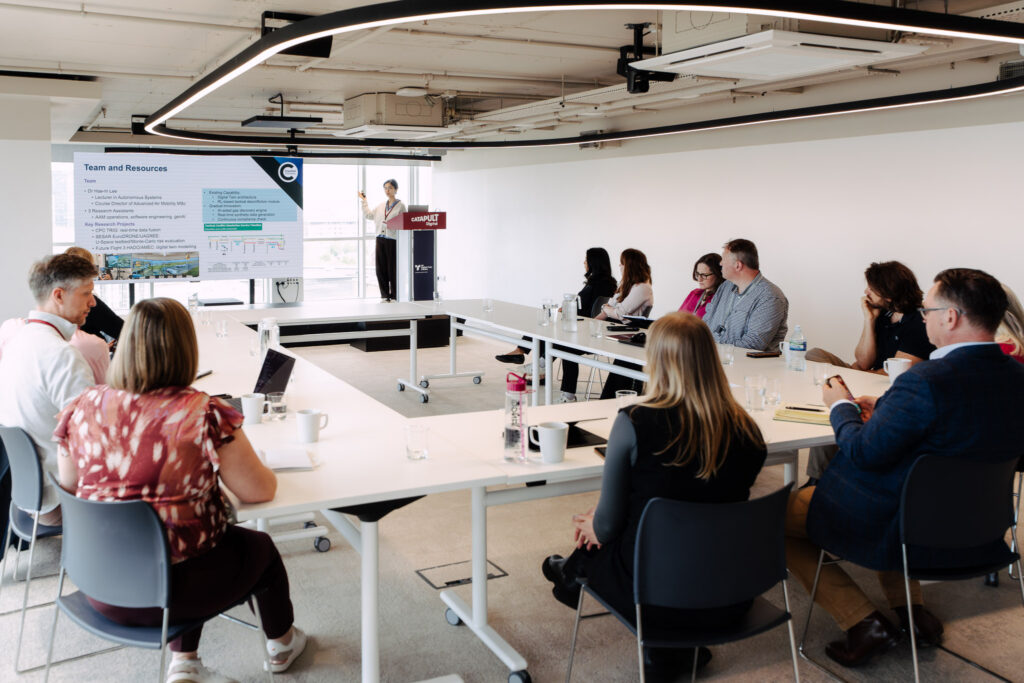
Cranfield University is delivering an AI-enabled Digital Twin Operations (DTOps) framework for Advanced Air Mobility (AAM), designed to keep digital twins continuously synchronised with real-world airspace. Combining live data fusion, real-time synthetic augmentation and persistent model evolution, the framework enables continuous cyber-physical compliance, security monitoring and high-fidelity 3D airspace modelling. These capabilities are expected to accelerate certification, strengthen safety assurance and support scalable deployment of Beyond Visual Line of Sight (BVLOS) operations and Electric Vertical Take-Off and Landing (eVTOL) platforms.
The accelerator has a strong emphasis on collaboration and knowledge sharing across the academic community, including engagement with conferences and the wider research ecosystem, moving beyond theoretical research to deliver practical and transferable outputs that can support wider industry adoption including a final demonstration event showcasing developed solutions to industry stakeholders, a comprehensive final report, and open-access frameworks to support continued innovation and reduce barriers to digital twin development across areas such as integration, data services, cyber-physical systems, intelligence, and security and trustworthiness.
Find out more about the UK Digital Twin Centre here.
The Digital Twin Academic R&D Accelerator is designed to connect academic expertise with industry challenges, helping to turn cutting-edge research into practical applications. By supporting projects focused on trust, assurance and operational scalability, the programme is helping to strengthen the UK’s leadership in digital twin innovation. Dr Katrina Thompson Director, UK Digital Twin Centre
Assuring the trustworthiness of digital twins in air traffic control is crucial where lives and critical infrastructure are on the line. If we can’t continuously prove these systems are safe as they operate, their potential will remain locked out of the environments where they could be most transformative. DARTER will give operators and regulators a way to see that trustworthiness in real time. Dr Christopher Burr Senior Researcher in Trustworthy Systems, Alan Turing Institute
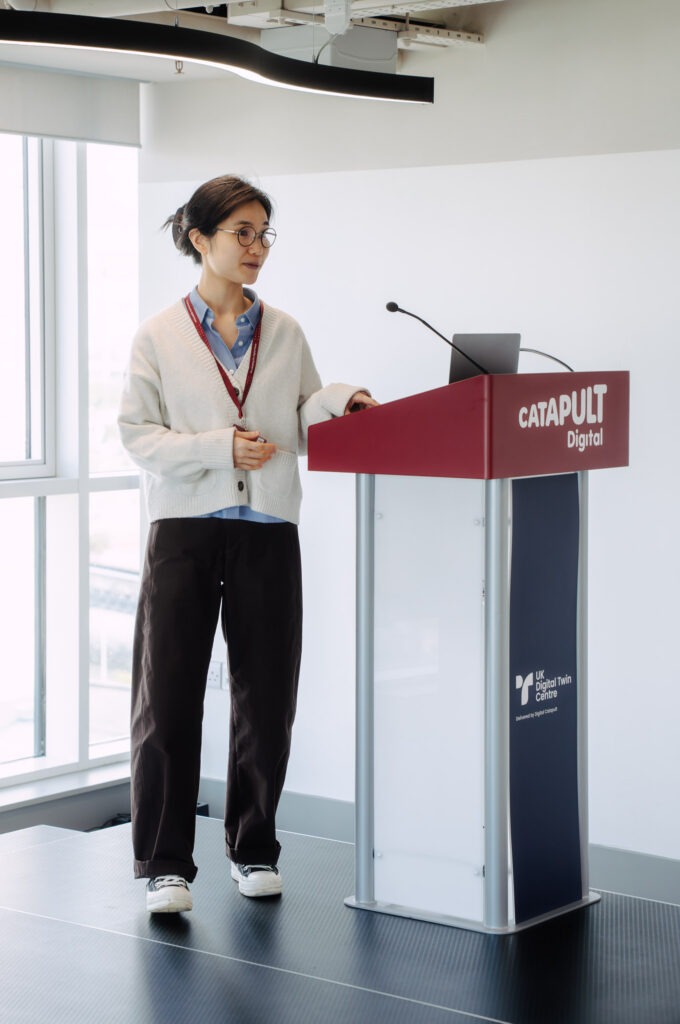
The programme’s focus aligns with my career goal to turn academic innovation into real-world operational impact, through close collaborations with the cohort, industry, and government. I am excited to contribute my work on airspace digital twins and AI‑enabled safety assurance, and to help strengthen the UK’s innovation ecosystem for future transport. Dr Hae In Lee Lecturer in Autonomous Systems, Cranfield University

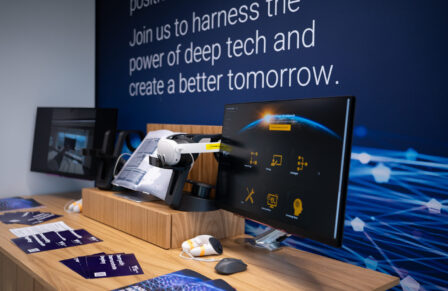
Delivered by Digital Catapult and funded by Belfast Region City Deal and Innovate UK, the UK Digital Twin Centre makes…
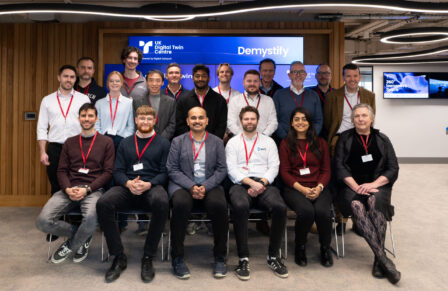
Digital Catapult has announced the Digital Twin Adoption Accelerator, supporting nine SME partnerships, including three Northern Ireland-based pairings, to develop…

Organisations collaborate on new approaches to building a digital first supply chain
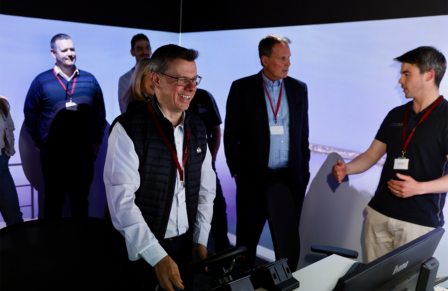
The UK Digital Twin Centre has officially opened in Belfast, marking a major milestone in the UK’s digital innovation landscape.…

Belfast Region City Deal and Innovate UK have announced a £37.6m investment in the UK Digital Twin Centre, a centre…