






Digital Supply Chain Programme: Made Smarter Innovation | Digital Supply Chain Hub
Creating a virtual hub, data observatory and network of industrial living labs to optimise information flows across manufacturing supply chains.
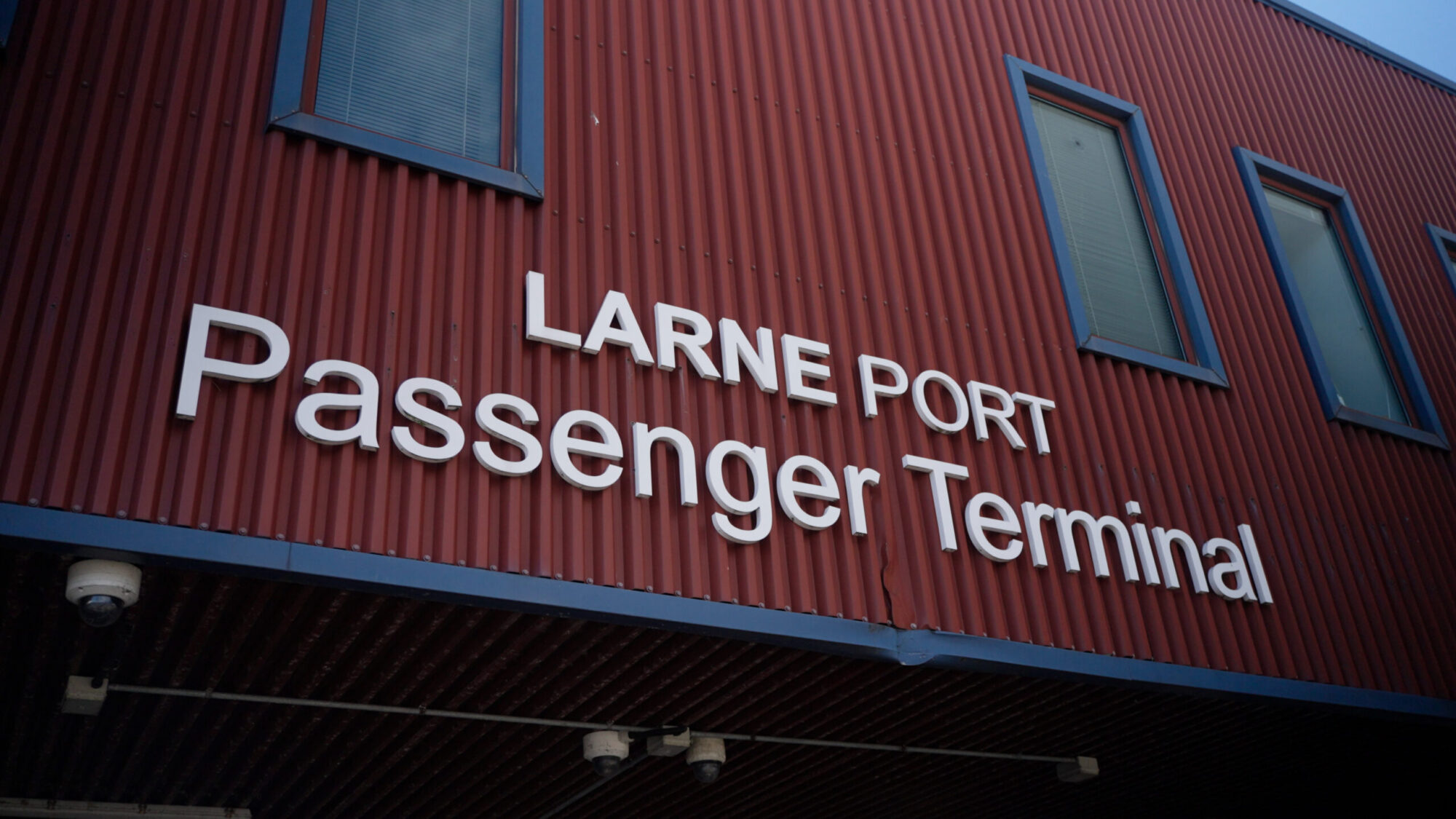
Supported by Digital Catapult and the UK Digital Twin Centre’s Digital Twin Adoption Accelerator programme, technology company Helix8 collaborated with Port of Larne in Northern Ireland to create a live, operational digital twin of a working port which measures energy use and carbon emissions in real time.
Helix8 is a Northern Ireland technology company building geospatial digital twins and IoT platforms for ports and industrial infrastructure. It builds live 3D models of real places, fed by sensors, so that the people who run them can see what is actually happening and make better decisions.
Port of Larne, as the industry adopter, required a measured emissions baseline and its involvement ensured the project was kept anchored to genuine operational needs. The end product of this successful partnership is an affordable digital twin for regional ports which supports day-to-day cost control as well as long-term planning towards essential decarbonisation.
UK ports face growing regulatory pressure to decarbonise from the International Maritime Organization’s 2050 targets and the UK’s own net zero commitments.
A measured baseline is needed for a port to make a credible decarbonisation plan and to access much of the funding available for the transition. However, most small and mid-size ports have no real-time data on their energy use or emissions.
Industry evidence, including the IAPH World Ports Tracker, shows a persistent gap between the decarbonisation obligations facing smaller ports and their access to measurement and planning capability.
Sophisticated digital twins exist at major ports such as Rotterdam and Singapore, but nothing comparable exists at a price point small ports could justify. A verified baseline is the prerequisite for any credible decarbonisation pathway: it is what unlocks funding, satisfies auditors and enables evidence-based investment.
Helix8 had the core geospatial and IoT capability and a clear concept for an operational port twin, but no deployed system, no measured baseline, and no validated route from concept to a production-grade deployment at a working harbour. Port of Larne had never had a measured emissions baseline.
Helix8 and its Port of Larne partners hoped the project would prove that a full evidenced emissions baseline could be delivered affordably at small-port scale.
“Every UK port is being asked to decarbonise, but you can’t reduce what you can’t measure. The Digital Twin Adoption Accelerator was the right opportunity at exactly the right moment. It let us prove, at a real working harbour, that a credible, standards-aligned baseline can be established for a fraction of what the industry assumed it cost. The UK Digital Twin Centre gave that ambition a home.” John Harrison, CEO, Helix8
There was a clear gap in the market for this digital twin technology. Low-power sensor networks, affordable edge AI hardware, and photogrammetry-based 3D capture mean a capability that once required a multi-million-pound programme can now be delivered at a small fraction of that cost.
The Port of Larne Digital Twin involved:
The headline output is a measured, fully evidenced emissions baseline for the harbour: 47 tonnes of CO₂-equivalent (measured May 2026, annualised), produced in line with the internationally recognised GHG Protocol and ISO 14064-1 standards, with complete data provenance. Every figure can be traced back to the sensor reading that produced it, to a standard an auditor would accept.
On top of the baseline sits a Marginal Abatement Cost Curve (MACC) engine. This decision tool ranks possible decarbonisation interventions by cost per tonne of carbon saved, so the port can see which investments deliver the most impact for the least money, and in what order.
The development approach was deliberately incremental: prove each component cheaply on a small scale before committing to wider deployment and build around the port’s existing operations rather than asking it to change how it works.
The Digital Twin Adoption Accelerator programme provided the structure and credibility to turn the concept into a delivered project. Helix8 working alongside Port of Larne as industry adopter meant the project was always anchored in real operational need. The programme’s cadence of milestones and mentoring also kept delivery disciplined.
A series of market readiness workshops delivered by the UK Digital Twin Centre team sharpened how Helix8 positions, prices and evidences its proposition. The Accelerator Showcase event also gave the project a platform in front of exactly the right audience to demonstrate project outcomes to relevant stakeholders within the maritime industry, government and funders.
Digital Catapult’s challenge and mentoring pushed Helix8 to be more precise about their claims and methodology. This discipline directly strengthened the technical rigour of the measurement approach and the commercial proposition.
Crucially, the UK Digital Twin Centre programme shortened the project timescale and raised the ambition from showing the technology worked to successfully delivering a verified, production-grade capability at a working port.
“What made the difference was the combination of disciplined delivery and genuine market support from Digital Catapult. The mentoring and market readiness workshops sharpened every claim we make, and the networking opened doors a regional SME can rarely find alone.” John Kerr, Port Facilities and Maintenance Manager, Port of Larne
The most significant outcome was the completed proof of concept: a production-grade operational digital twin running at Port of Larne It provides a measured emissions baseline aligned to GHG Protocol and ISO 14064-1 with full provenance. Alongside this is a deployed sensor and edge AI infrastructure at the port.
This complete, replicable technology stack brings live data, spatial context and scenario planning together in one place and is deliverable at a fraction of the cost of existing port digital twins. This means small ports can now establish a credible, standards-aligned emissions baseline affordably, which is the prerequisite for both decarbonisation funding and regulatory compliance.
Port of Larne now has continuous energy visibility across the estate, supporting cost control that was previously impossible. In risk terms, the platform’s decision tooling directly reduces the risk of misallocated decarbonisation capital. This is a risk the wider sector has experienced concretely when infrastructure investments have been made without adequate data. Capital can now be allocated with evidence rather than assumption.
Edge AI video analytics running on low-cost hardware at the port also demonstrate vehicle counting and monitoring capability that can expand into number-plate recognition and safety compliance detection.
Helix8 can now show prospective port customers across the UK a working system with audited-standard outputs rather than a concept deck. Other commercial opportunities are also being explored whilst an industry adoption partnership with Port of Larne continues beyond the programme.

“We finished the programme with something the sector has been missing: proof that a small port can have auditor-grade emissions measurement and a live investment decision tool at a cost the sector can actually bear. The long-term value is a UK small-port sector that can decarbonise on evidence rather than assumption — and we’d welcome continuing that work with the UK Digital Twin Centre.” John Harrison, CEO, Helix8 CEO, Helix8
Helix8 has submitted two research funding applications, building directly on the programme’s outputs. If successful, this will fund the methodology work underpinning replication across the sector.
In parallel it is also developing the Net Zero Planner module. This will deepen the MACC decision engine at the heart of the platform and expand the AI video analytics capability already deployed at the port.
The strategic goal is to take the proven Larne stack to other mid-size UK ports facing the same regulatory deadline, while pursuing opportunities the programme has opened in smart cities, defence and critical infrastructure.
Helix8 sees collaboration with Digital Catapult and the UK Digital Twin Centre as a natural part of that journey, and Port of Larne as the reference site that makes the rest of the market believable.
This project demonstrates what the Digital Twin Adoption Accelerator was designed to achieve: bringing innovative technology together with a real operational challenge and supporting it through a working, validated solution. It’s a strong example of how digital twins can move beyond the concept stage and deliver practical value in UK infrastructure. Dr Rebecca Lutton, Head of Technology Adoption, Digital Catapult