







Black Founders Programme
The Black Founders Programme is targeted at early stage and pre-seed, Black-founded companies creating innovative products and services for the...
Equips the UK to be future ready through the practical application of deep technology, underpinned by the commitment to decarbonise.

Across UK industry, businesses are responding to rising energy prices, new legislation, and growing customer expectations. The UK has set ambitious targets for achieving clean power by 2030 and achieving net zero for the UK economy by 2050. While each sector is moving at its own pace, innovation and collaboration are key to achieving these goals.
As a deep tech innovation organisation, Digital Catapult’s ambition to equip the UK to be future ready through the practical application of deep technology is underpinned by our commitment to supporting decarbonisation efforts, across our three primary interventions:
While emerging technologies provide the opportunities to drive decarbonisation, the environmental impact of these technologies can be substantial. For example, AI datacentres use enormous amounts of energy and create pressures on local water availability and land use.
Many barriers still remain to achieving sustainable AI, including knowledge and data gaps, and cross-sector collaboration. Whilst business leaders recognise the need for deep tech innovation, they don’t yet know how to do this in a way that also cuts emissions and improves energy efficiency effectively. Existing frameworks and legislation often fall short in guiding companies on AI-related sustainability, making appropriate intervention essential.
Moreover, there are significant barriers faced by new innovations which drive decarbonisation including implementation costs, fragmented policy, and the difficulties of scaling these solutions. While innovation is happening, it’s not always happening fast enough or in the right places.
We recognise that as deep tech innovation often depends on energy-intensive infrastructure that can create new pressures elsewhere, we need to empower businesses to understand the emissions cost and opportunities of emerging technologies.
That is why we are working to support businesses, both directly in the decarbonisation ecosystem, but also more broadly across our technology areas to consider the range of impacts of their interventions. With our support, businesses are better able to consider the wider risks and opportunities of innovation so that responsible innovation can flourish.
This will ultimately empower businesses to apply more sustainable and long-lasting deep tech solutions to their operations, which may include AI that can increase efficiency while processing vast datasets at a fraction of today’s energy.
Digital Catapult is actively supporting UK industry in their decarbonisation journey, providing pathways to optimise industrial processes, reduce waste and be future ready. We create scalable, sustainable products, platforms and tools to monitor, evaluate and action solutions to reduce carbon emissions in industry, such as the Ecometer and our Green Hydrogen Certifier. We also work with startups and large businesses to develop deep tech solutions to improve environmental performance.
As we enable deep tech companies to scale through our acceleration and innovation programmes, we have supported SMEs to develop new solutions to improve UK industrial supply chain resilience across a range of sectors.
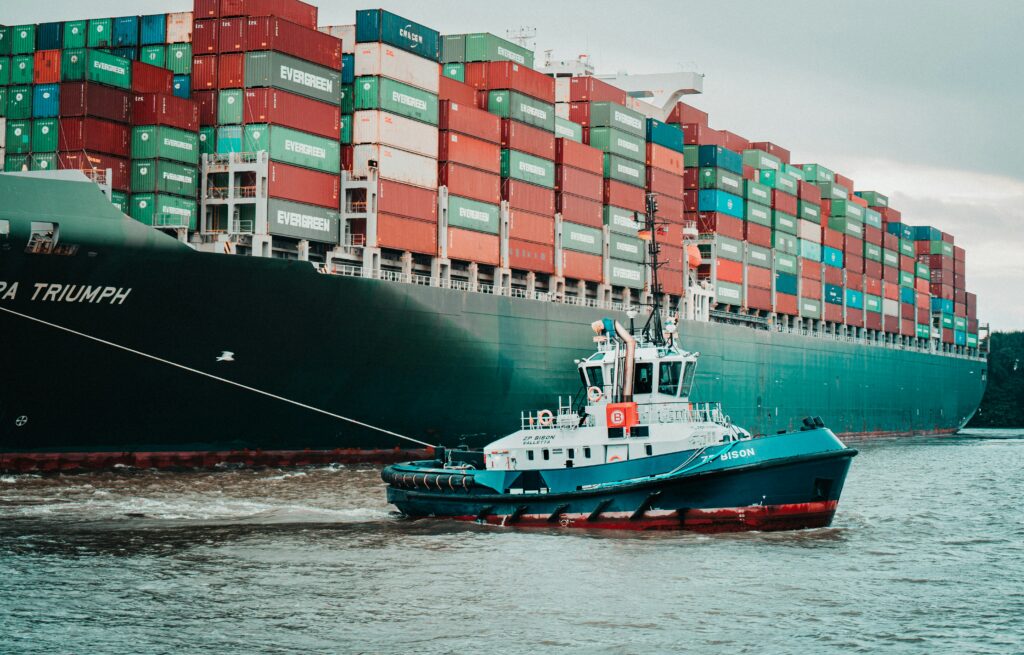
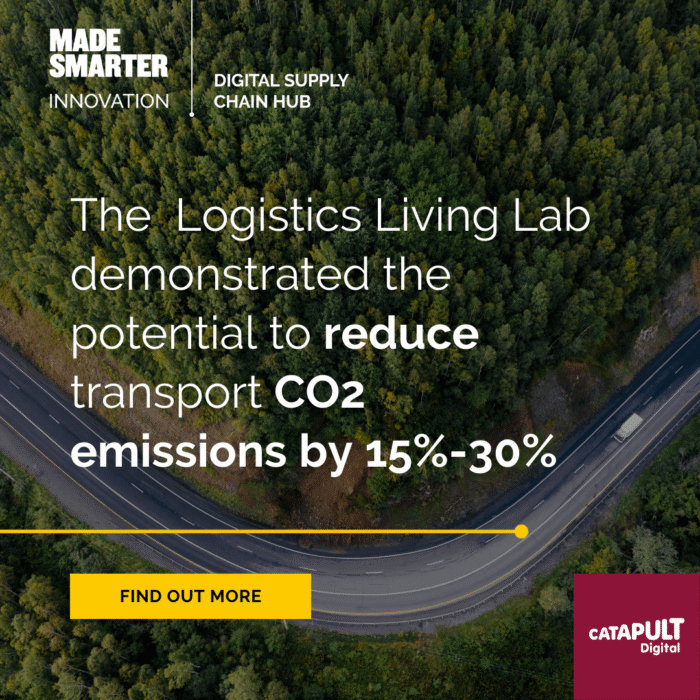
This includes SMEs considering how Scope 3 emissions can be tracked and monitored using AI, as well as others considering new ways to make supply chains more transparent, cut carbon emissions and reduce energy consumption and costs, informing and empowering decision-making amongst business leaders. By applying AI and distributed ledger technology to reduce inefficiencies like empty lorry journeys through the Logistics Living Lab, the companies that we have supported have demonstrated how deep tech innovations can lower emissions across logistics and haulage and deliver measurable decarbonisation.
Our convening capabilities are facilitating the transition to net zero across high-emitting sectors, including energy, agriculture, built environment and supply chains, meeting the UK’s net zero target by 2050.
We are bringing together over 40 policy, industry, and entrepreneurial thought leaders, including Octopus, SSE, and the Department for Energy Security and Net Zero, to develop AI offerings in partnership with Energy Systems Catapult and The Alan Turing Institute through AI for Decarbonisation’s Virtual Centre of Excellence (ADViCE). This initiative enables an ecosystem of AI companies, industrial adopters, policymakers, and investors to promote and coordinate the adoption of AI decarbonisation applications.
We are also laying the groundwork for a confident, investable market that harnesses deep tech innovation to deliver sustainable energy flexibility at scale with Energy Systems Catapult through GridFlex, a programme funded by Innovate UK. Tackling issues in the current fragmented, complex, and siloed system will help achieve a digitalised, flexible and carbon neutral energy system in the UK while supporting the Clean Power 2030 Action Plan.
Deep tech alone will not deliver sustainable change, but when embedded in robust, cross-sector frameworks, it can provide the transparency, accountability, and adaptability businesses need.
By continuing to convene capabilities, accelerate practical adoption, and empower businesses with the tools and understanding they need, we can ensure progress doesn’t stall. We’ve already seen a 10% waste reduction and 8% reduction in CO2 as we help organisations take the next step in their decarbonisation journey. Going forward, we aim to focus on connecting up the ecosystem to accelerate AI solutions to decarbonisation challenges and enable these to be deployed at scale. With the right interventions and partnerships, the UK is well-positioned to lead the way in building trust, resilience, and a greener industrial future.
Speak to one of our experts today to see how we can support you.

Discover a detailed examination of the UK’s evolving energy system, emphasising the critical role of flexibility, coordinated innovation and long-term…

This report looks at the Green Hydrogen Certifier – an end-to-end demonstration of a potential digital certification solution for hydrogen…

This report looks at challenges shared across the UK energy sector, as well as digital interventions that will enable the…
Learn how the DigiFed programme gave Acciona access to the EU technology innovation community.
Learn how RealVNC is testing a new way of reducing C++ vulnerabilities through Digital Security by Design



“Our engagements with Digital Catapult have connected us to a fantastic network of tech innovators and helped us identify the…

“Digital Catapult has supported us in many areas including help to refine our pitch and introductions to key investors” Mikela…

Sellafield Ltd is responsible for the safe and secure operation and clean-up of the Sellafield nuclear site. Its purpose is…

Digital Catapult and Energy Systems Catapult have partnered through the GridFlex Programme, funded by Innovate UK, to accelerate the practical application of deep tech…

A pioneering programme to propel hydrogen technology into a cornerstone of the UK’s industrial landscape.

Developing innovative artificial intelligence technologies for decarbonisation applications to support the transition to net zero.
Digital Catapult offers a range of services to help your organisation benefit from deep technologies.
Services
Do you know your climate tech from cleantech, or envirotech from green tech? What’s the difference and why is it…
Hydrogen technology refers to the ways of producing, distributing, and consuming hydrogen as a source of renewable energy. It could…
Digital Catapult and the High Value Manufacturing (HVM) Catapult have been awarded £4m to accelerate the adoption of digital solutions…
Digital Catapult’s Head of Sustainability Dr David Pugh shares eight ‘envirotech’ startups from the 2023 EnviroTech 50 list.
Digital Catapult launches the Logistics Living Lab to cut the carbon emissions of empty and near-empty delivery trucks.