





Black Founders Programme
The Black Founders Programme is targeted at early stage and pre-seed, Black-founded companies creating innovative products and services for the...

Led by the University of Bristol and awarded £30 million in funding by UK Research and Innovation (UKRI) through the Strength in Places Fund, MyWorld is a programme designed to accelerate innovation in creative technology across the West of England. Bringing together universities, creative organisations and industry partners, the programme focused on advancing screen-based media, immersive technologies and AI-driven production while strengthening the regional innovation ecosystem.
As an innovation partner within MyWorld, Digital Catapult was responsible for designing and delivering programmes that helped creative technology small and medium-sized enterprises (SMEs) translate research and experimentation into commercial opportunity. From the outset, Digital Catapult’s aim was to ensure that companies developing innovative immersive and creative solutions were supported not only to experiment, but to scale. The outcomes delivered through this work demonstrated the effectiveness of MyWorld as a model of intervention, connecting research, industry and startups in ways that generated tangible growth across the region.
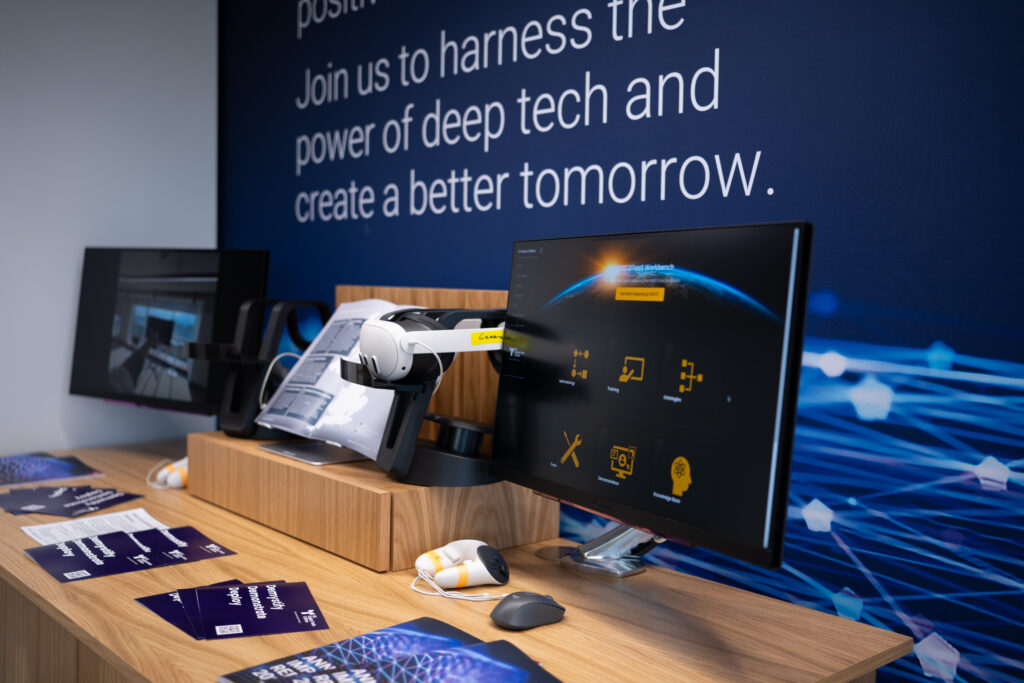
A central element of Digital Catapult’s contribution to MyWorld was the application of commercially focused immersive technology expertise to help startups develop scalable solutions.
At a systems level, these expertise informed the design of funding calls that prioritised technical innovation alongside creative application. Rather than focusing solely on content-led projects, programmes were structured to support deeper technologies that could underpin new products, workflows and creative production pipelines.
These included projects exploring advanced approaches such as implicit neural representations for volumetric video workflows, enabling the real-time capture and streaming of 3D content into digital environments. By supporting this type of foundational technology development, the programme ensured that companies were not only creating content, but building the technical infrastructure required for scalable, next-generation creative experiences.
The funding calls were also designed to complement one another, creating a progression pathway for companies as their technologies matured. Many companies first engaged through Challenge Calls, where they developed minimum viable products in response to industry challenges. From there, they could deepen their work through Collaborative Research and Development (CR&D) projects, working with one of MyWorld’s research organisations to expand their technical capability. Further opportunities to scale innovation were available through a range of other Digital Catapult programmes which supported companies as they prepared technologies for commercial adoption and enabled them to move up in their commercial readiness level.
In practice, this created a connected pathway through which SMEs could engage with MyWorld, meaning that they were able to move from early experimentation through to investment readiness, procurement opportunities and market entry.
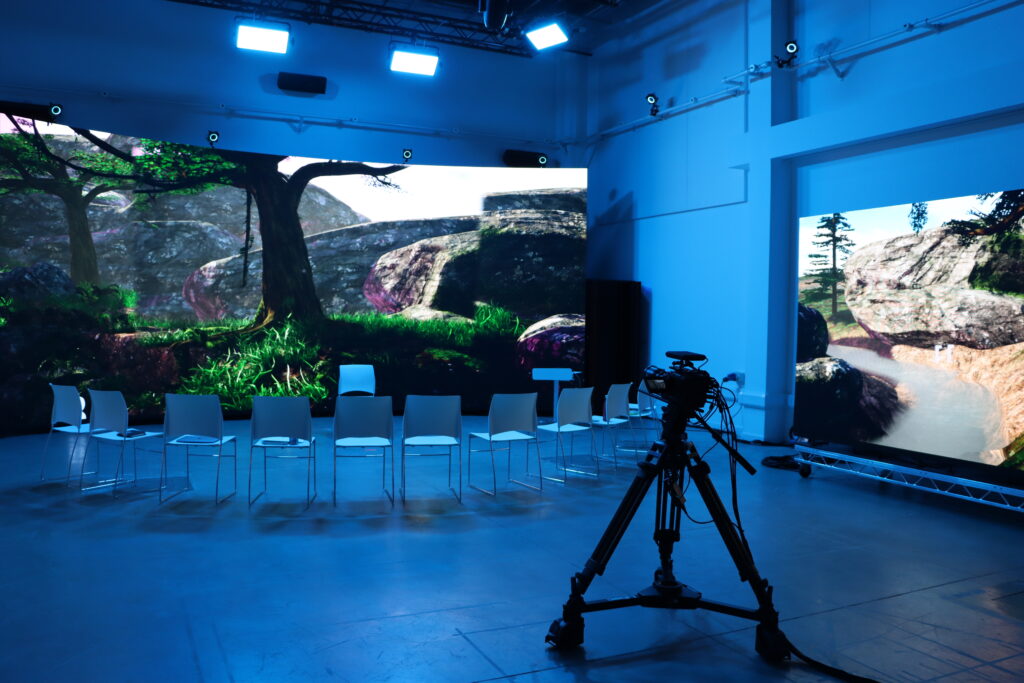
At the delivery level, Digital Catapult contributed commercially led creative technology expertise across the MyWorld programme, shaping both its design and delivery. This expertise informed the development of programme structures and facilities, ensuring they supported scalable, real-world applications of emerging technologies.
It also translated into direct support for 39 company engagements, with Digital Catapult’s immersive specialists providing guidance on the technical feasibility of prototypes, contributing to the review of CR&D project proposals, and offering ongoing feedback as projects evolved. Through this combination of programme-level design and hands-on support, companies were able to develop solutions that were not only technically robust, but aligned with pathways to adoption, investment and market readiness.
This industry-focused expertise complemented the academic creative capabilities provided by MyWorld’s research institutions, ensuring companies benefited from both research excellence and commercially oriented technical insight.
Alongside technical expertise, Digital Catapult designed mechanisms that introduced regional startups to national and global industry partners.
Through MyWorld Challenge programmes, SMEs were able to collaborate directly with leading organisations including NVIDIA, the BBC and Amazon Web Services (AWS). These programmes translated industry priorities into open challenges, giving startups the opportunity to develop solutions to real-world problems while gaining access to technical infrastructure and insight.
This model has enabled relationships to extend well beyond the initial programme. For example, Meaning Machine first engaged with NVIDIA through Digital Catapult’s Challenge programme and has since developed an ongoing collaboration with them. Building on this partnership, the team has integrated NVIDIA ACE with its Game Conscious™ AI technology to develop AI-powered non-player characters, and has gone on to showcase this work at major international industry events including the Game Developers Conference (GDC), demonstrating how early-stage collaboration can evolve into long-term industry engagement and global visibility.
Industry partners were embedded throughout the lifecycle of these programmes, helping shape challenge briefs, providing feedback on prototype development and exploring potential adoption pathways for emerging technologies. For startups, this created valuable opportunities to validate ideas and refine products in response to industry needs. For partners, it provided a structured way to engage with innovative companies and explore new creative technology solutions in a low-risk environment.
Recognising that innovation does not happen in isolation, Digital Catapult also focused on ensuring that companies participating in its programmes were fully connected to the wider MyWorld ecosystem.
To support this approach, Digital Catapult established a delivery team based in the West of England, enabling close engagement with the regional creative technology community and an up-to-date understanding of emerging opportunities across the programme. This on-the-ground presence allowed the team to proactively connect startups to additional funding, development and showcase opportunities as they arose.
A key example of this is the MyWorld Springboard Fund, a dedicated follow-on fund designed to support companies in taking their work beyond R&D and into international markets and commercial opportunity. Available to teams that had already participated in MyWorld programmes, the Springboard Fund enabled companies to amplify existing projects by accessing global audiences, investors and industry networks; helping overcome the cost barriers often associated with international exposure.
Through this fund, companies were able to attend and showcase at major international events such as SIGGRAPH in Vancouver, Game Developers Conference (GDC) in San Francisco, and SXSW in Austin, positioning MyWorld-supported innovation on a global stage. For companies such as The Black Laboratory and Meaning Machine, these opportunities provided critical routes into new markets which in turn enabled them to demonstrate their technologies to industry leaders, build partnerships and explore pathways to adoption.
In some cases, Springboard funding also supported targeted business development activity, including access to specialist mentoring where this accelerated market entry. For example, The Black Laboratory used the fund to bring in industry expertise to help navigate the motion capture market following early-stage prototype development through the Challenge programme. Alongside Springboard, companies were also connected to initiatives such as MyWorld Fellowships, further supporting their progression from development through to commercialisation.
The impact of this coordinated, place-based approach can be seen in the connections and visibility created for participating companies. Startups were introduced to new collaborators — for example, Marshmallow Laser Feast and All Seeing Eye’s engagement with the University of Bristol’s Smart Internet Lab as part of their STREAM project. Working with the lab, alongside academic partner Verity McIntosh from the University of the West of England, the team explored how different methods of internet connectivity could support their ambition to deliver large-scale, multi-user, location-based VR experiences.
Through MyWorld supported pathways, including regional showcase events and wider programme engagement, companies such as Meaning Machine and Fictioneers presented their immersive storytelling demonstrators during a visit from Baroness Jones in Bristol – demonstrating how Digital Catapult can connect regional innovation with policymakers, industry and new markets.
Through this integrated system of technical support, industry collaboration and regional coordination, Digital Catapult has helped creative technology SMEs progress from experimentation to commercial opportunity.
Companies participating in these MyWorld programmes have developed new products, strengthened their technical capabilities and accessed wider audiences for their work. At the same time, collaborations fostered
through the programme have strengthened the creative technology ecosystem across the West of England, connecting startups, researchers and industry partners in ways that will continue to generate innovation beyond the lifetime of the programme.
As MyWorld reaches the end of its funding period, the success of these initiatives highlights the value of place-based innovation models that combine research expertise, industry collaboration and targeted support for SMEs. By bringing these elements together, the programme has demonstrated how regional ecosystems can become powerful engines for creative technology innovation and economic growth.
The partnership between Digital Catapult and MyWorld created a highly effective framework for business growth — investing in, connecting and guiding companies from R&D prototype through to commercialisation. By combining proven approaches with sustained development funding, the programme has enabled companies to generate tangible growth potential and bring new products and services to market, both nationally and internationally.
Mark Leaver Head of Partnerships and Investment at MyWorld

To explore accessibility for their immersive production, Unwired Dance Theatre worked with our Advanced Media Production Studio.

Creative deep tech, a term coined by Digital Catapult, is becoming a key driver of the UK’s innovation future, transforming…

CreaTech Frontiers is placing innovation and growth at its core to develop a thriving creative industries ecosystem across the West…

Introducing the 2025 Black Founders Programme cohort!

The application of commercially focused immersive technology expertise to help startups develop scalable solutions.

A layered, place-based approach to funding and support, designed to help creative technology companies progress in the West of England.