






Black Founders Programme
The Black Founders Programme is targeted at early stage and pre-seed, Black-founded companies creating innovative products and services for the...
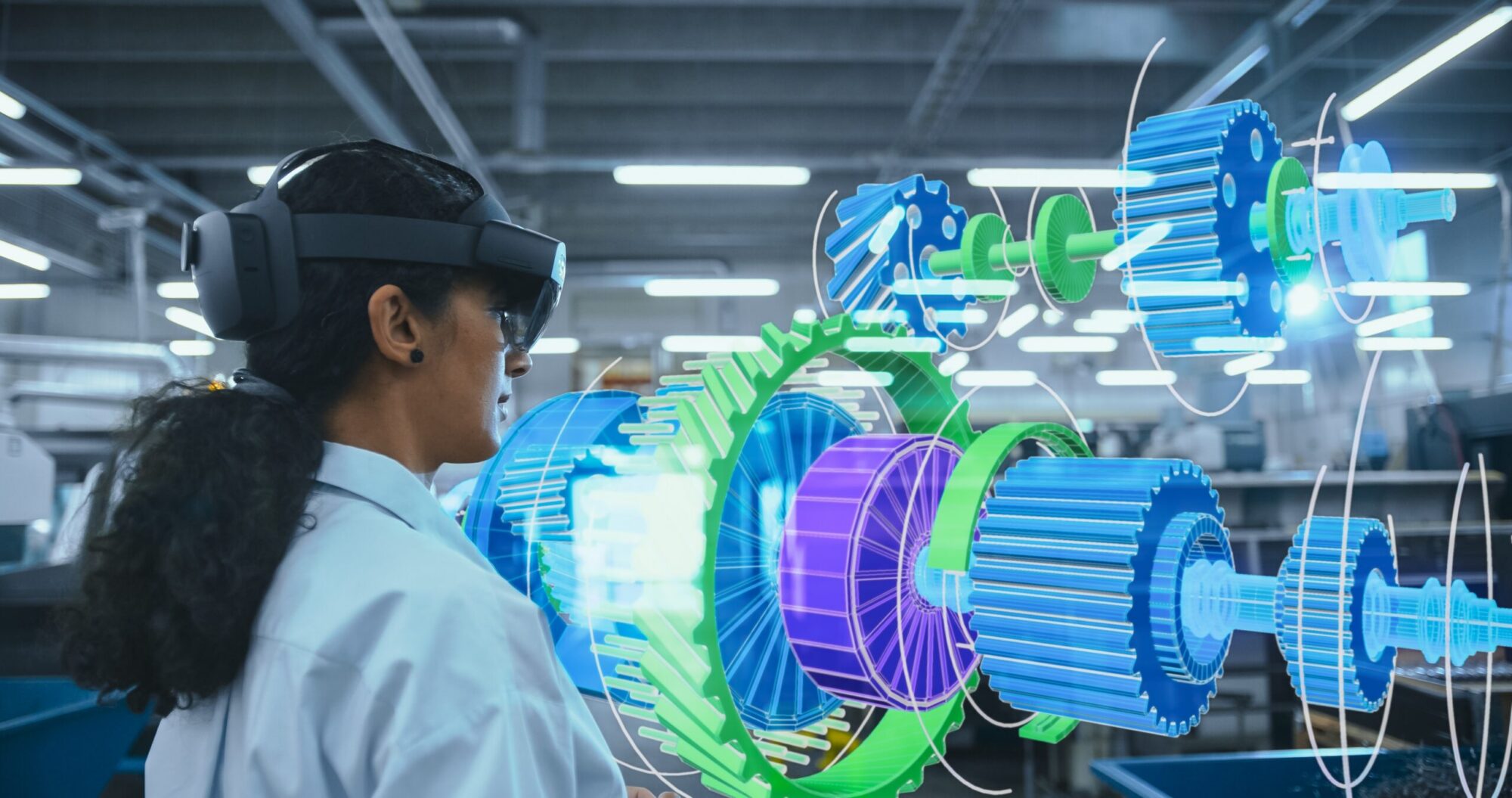
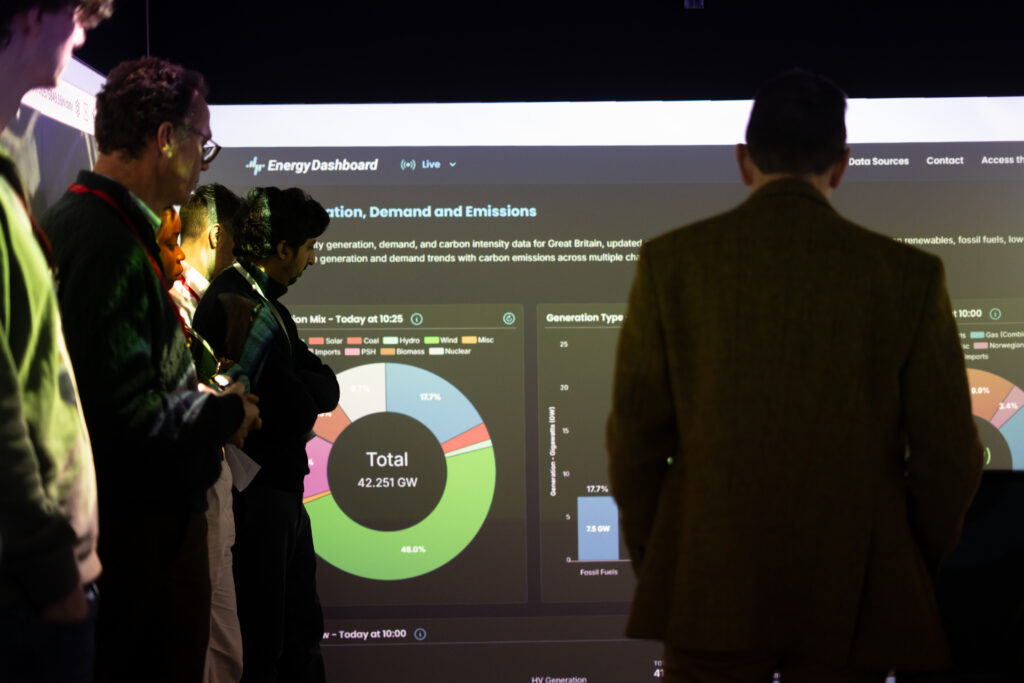
A digital twin is a data-driven virtual representation of a real-life entity or process, allowing real-time data exchange between physical and digital worlds. A true digital twin is an interactive system powered by six complementary capabilities and often involves a combination of technologies – from artificial intelligence to immersive tech – to help users understand, interact with and take actionable insights from the digital twin.
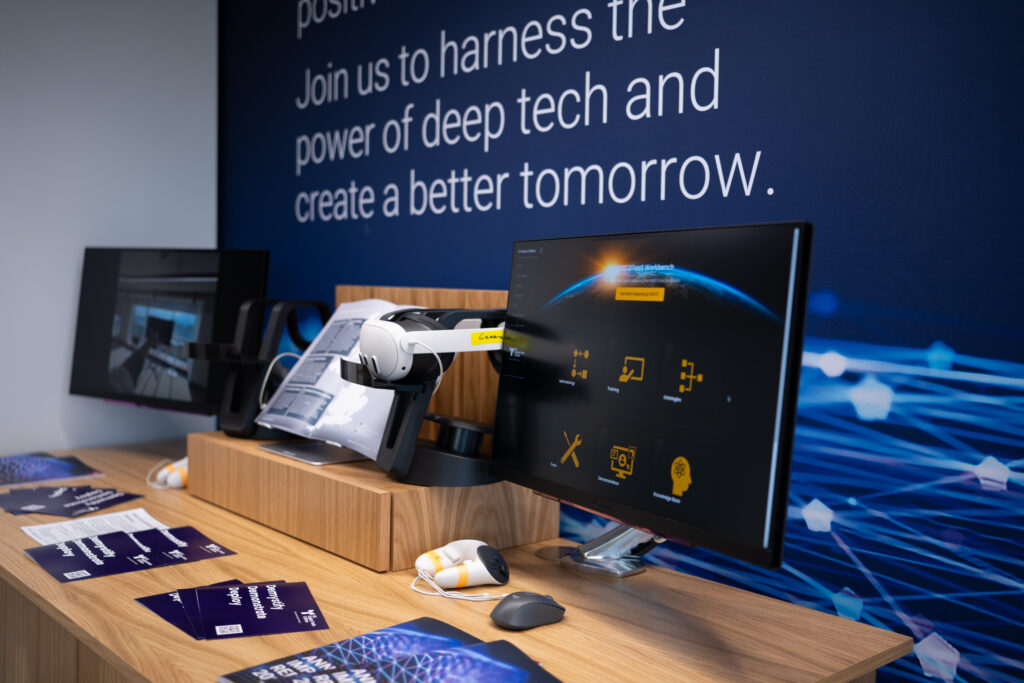
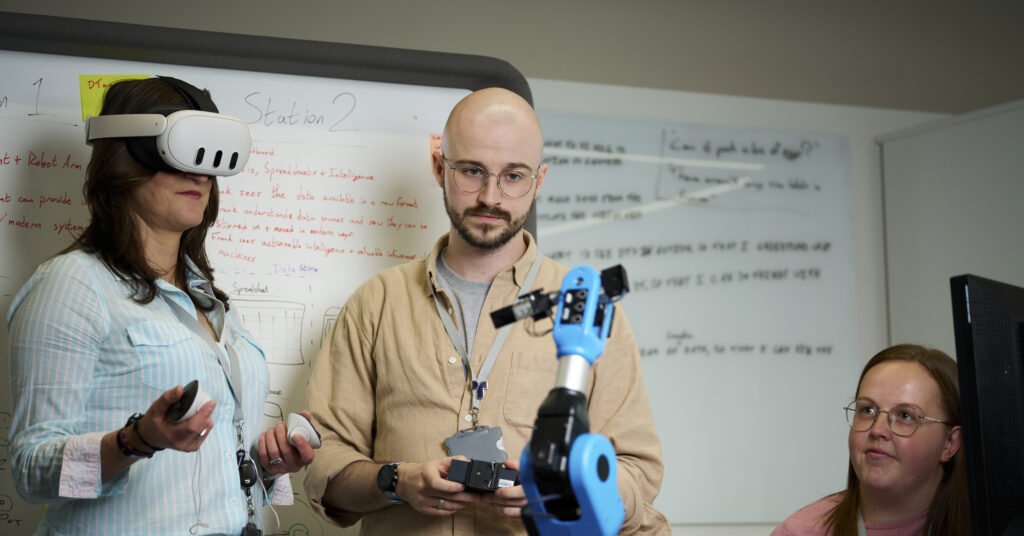
One type of technology particularly suited to harnessing the potential of digital twins is haptics. Haptic technology simulates the sense of touch by applying forces, vibrations, or motions to the user, enabling more natural interaction with both real and virtual systems. Haptic technology is commonly divided into haptic feedback or haptic sensors: outputs and inputs. Haptic feedback is defined as either tactile or kinaesthetic. Tactile feedback provides the feeling of surface texture, shape and vibrations. Kinaesthetic uses motors to create force, pressure, and push-pull effects.
Haptics appear in a variety of hardware devices:
Most people will already be familiar with haptics from vibrations produced by their smartphones, smart watches and other wearable tech, or from handheld games controllers. For digital twins, haptic technology is most commonly found in the form of wearable gloves to replace handheld controllers which enhance accuracy and utilise force feedback when pressing buttons.
Of course, in a digital environment a user isn’t pressing physical buttons, so the haptic gloves use data to simulate the force of a button being pressed to provide feedback into the glove.
Digital twins use a variety of sensors to gather data from the physical environments that are being replicated digitally, such as pressure, proximity, temperature, vibration, roughness and force. Instead of presenting this data to the user in a 2D display, there is the potential to feel this data using haptic technology, with wearable devices such as the gloves described above.
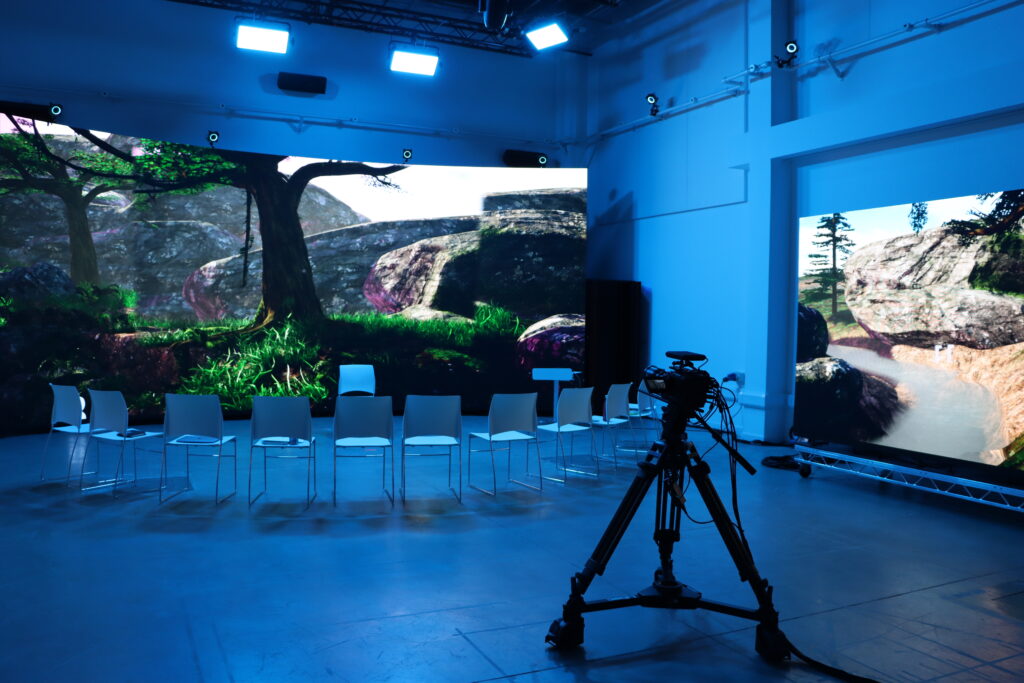
This application could be most useful for digital twins of environments, ‘spatial digital twins’ such as Smart Cities, or in sectors such as agriculture, energy, or natural resource management. These sectors rely heavily on geospatial data and spatial awareness, making them ideal for immersive technologies like Extended Reality (XR) – the umbrella term used to describe for Virtual, Augmented and Mixed Reality. XR offers a rich, 3D spatial canvas that pairs naturally with haptic feedback to create intuitive, multisensory interfaces.
The haptic representation of some of this data may be more abstract than others. For example, temperature sensors have an obvious link to thermal feedback (being able to feel hot or cold in the glove or other wearable device), but data from proximity sensors could be felt with a variety of stimuli such as heat, pressure or even the movement of air.
However, our senses don’t have a 1:1 relationship with the world around us; we don’t only hear with our ears, or taste with our tongues. Enhanced spatial awareness of an environment can be achieved with a variety of different feedback mechanisms allowing for a more multisensory experience. This creates a more accurate and nuanced depiction of the environment through digital twins, plus a more optimised user interface by visually displaying only necessary data and feeling the rest.
One benefit of incorporating multiple senses with a user-interface is that it is great for accessibility as people absorb and process information in different ways. Society leans very heavily on 2D screens and reading static information, rather than in spatial environments which harness the 3D space around us where information can be physically felt. This is why user experience (UX) considerations are very important when designing digital user interfaces. Check out this blog on the role of UX in immersive interfaces within digital twins.
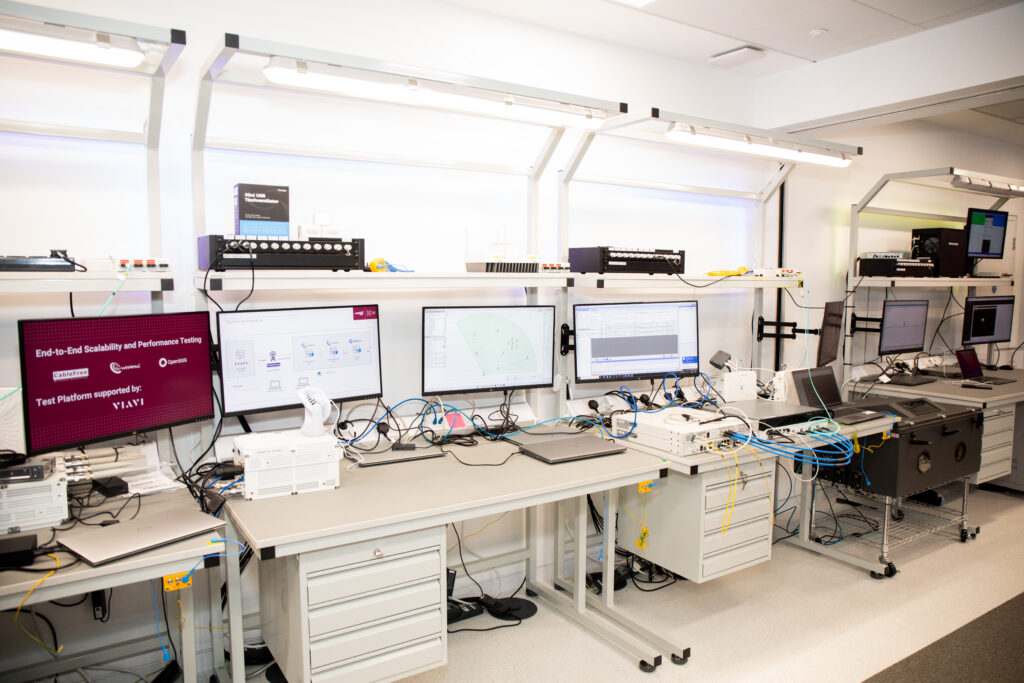
For real-time haptic feedback, latency becomes an issue. The delay in undertaking an action and then feeling the result of that action relies on good connectivity and a fast network. 5G provides the answer to tackle latency, and Digital Catapult’s nationwide network of 5G research and development Testbeds supports better practical integration and implementation of advanced connectivity technologies, e.g. immersive and haptic interfaces for digital twins.
Haptics brings a new layer of realism and functionality to digital twin interactions, and provides a range of specific advantages such as:
As digital twins and haptic technologies continue to evolve, their potential to transform industries, from smart cities and agriculture to manufacturing and healthcare, is immense. With advances in immersive technologies and advanced connectivity like 5G, these innovations are becoming more accessible and practical than ever before.
Digital Catapult is at the forefront of supporting this transformation, providing startups and established businesses alike with the tools, expertise, and partnerships needed to accelerate development and bring these deep tech solutions to market. Whether you’re looking to explore haptic integration, develop your digital twin capabilities, or connect with cutting-edge research facilities or like-minded organisations, there are opportunities to help push the boundaries of what’s possible and explore how to practically apply these technologies in a cost effective and impactful way.
Ready to bring the future of touch and interaction into your projects? Connect with Digital Catapult to learn how we can support your journey in harnessing haptic technology and digital twins to create the next generation of immersive experiences.
Join the UK Digital Twin Centre to learn how this transformative technology can drive efficiency, cost savings and business innovation.
Contact us to explore collaboration, schedule a consultation, or discuss your project needs: [email protected]