





Black Founders Programme
The Black Founders Programme is targeted at early stage and pre-seed, Black-founded companies creating innovative products and services for the...
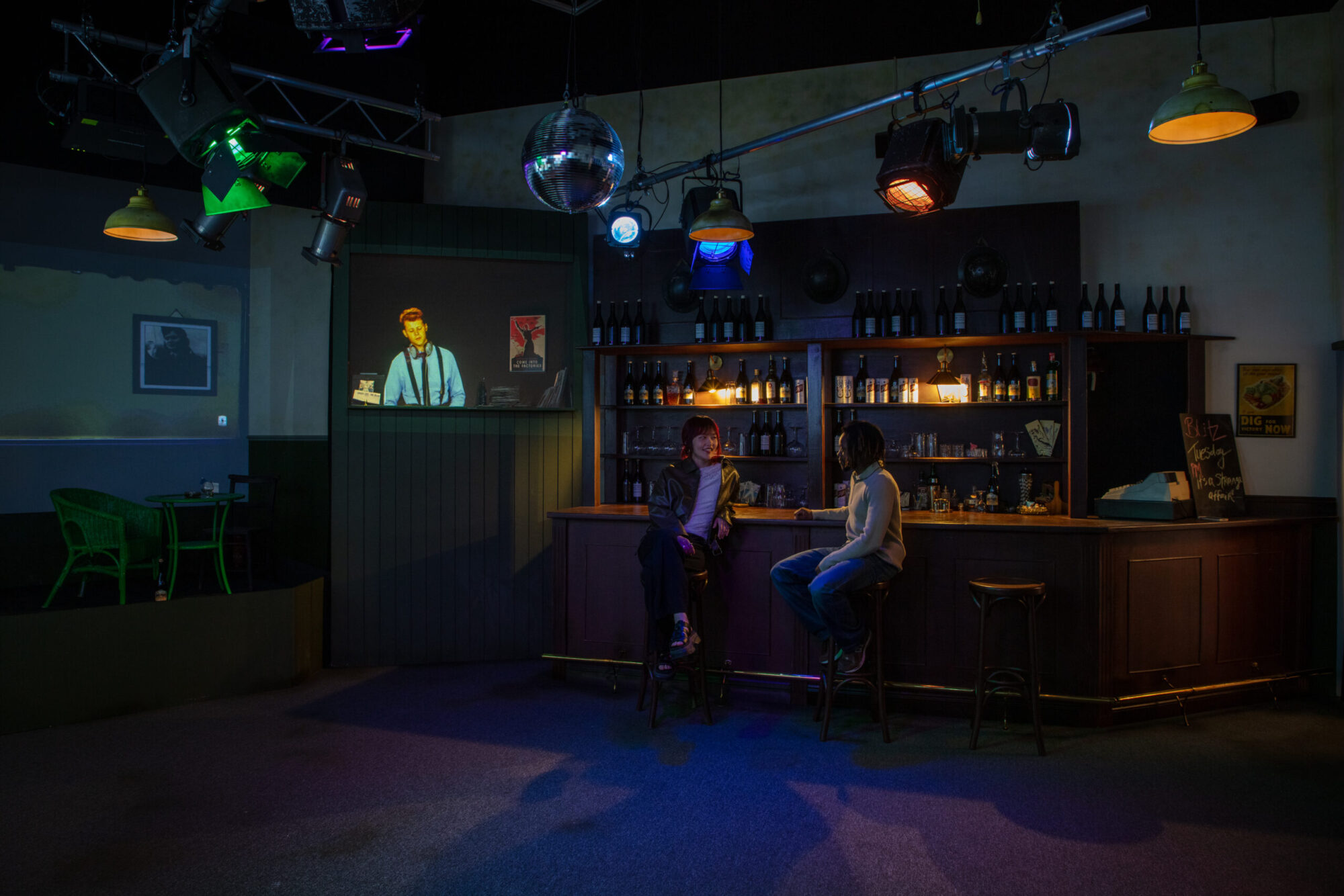
Digital Catapult, the deep tech innovation organisation, has today announced its role in a project with the Design Museum that brings the famous Blitz nightclub back to life as part of a new exhibition. The infamous Soho venue, known for launching the careers of creative pioneers in the 1980s including Boy George, Spandau Ballet and DJ Rusty Egan, has been reimagined using advanced media production capabilities to capture the energy and atmosphere of the time.
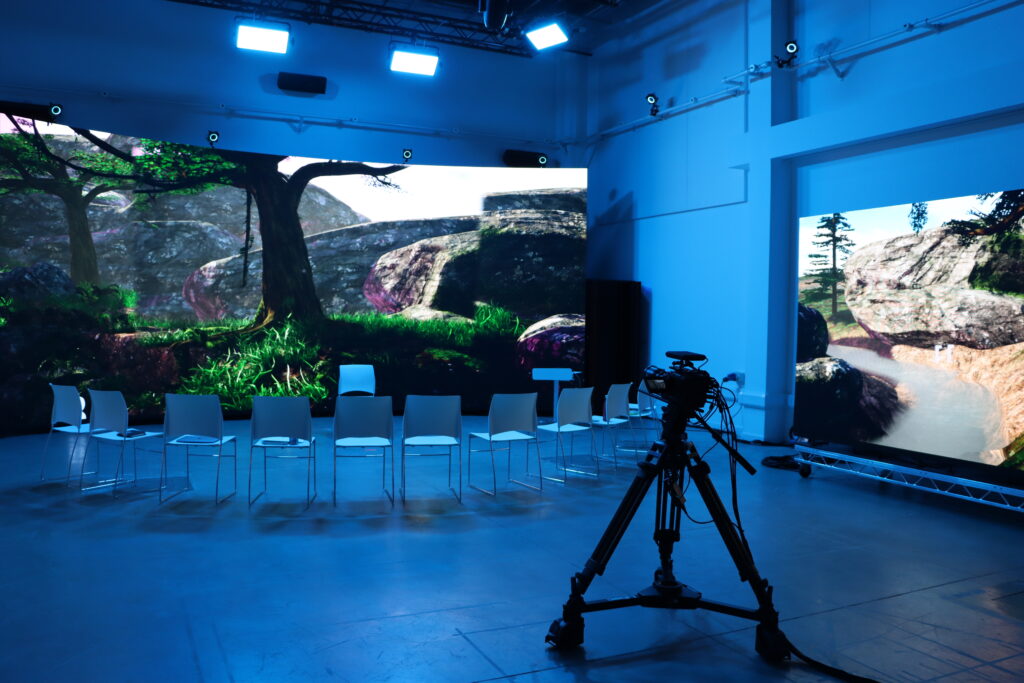
Delivered by Guildhall Production Studio, part of Guildhall School of Music & Drama, Digital Catapult leveraged its network of advanced media production studios to assist with the production management of a workflow that created an avatar of Rusty Egan, resident DJ and co-founder of the club, a montage of virtual Blitz Kids, and restored footage of Spandau Ballet from 1980. To recreate Rusty Egan as he appeared in 1979, an actor was filmed in accurate period costume, hair, and makeup, which was combined with archival images of Rusty that had first been upscaled and colourised using artificial intelligence (AI).
Further tools were used to create a realistic base portrait which were animated to capture different aspects of Rusty’s presence, and the final output was refined with further AI post-processing effects and image enhancement, before being upscaled edited and colour graded. A similar process was adopted to enhance original 1980 black-and-white documentary footage of Spandau Ballet, where original footage was first upscaled using AI enhancement and colourisation techniques.
The development of the exhibition convened capabilities with Guildhall School’s students and alumni, and partners Target3D and Southby Productions, to demonstrate how deep tech could captivate audiences and create compelling new experiences. The exhibition, titled Blitz: the club that shaped the 80s, was also developed in collaboration with some of the leading ‘Blitz Kids’, who experienced the venue, and pays homage to the UK’s creative output and the legacy of the nightclub that contributed to the art and entertainment that many enjoy today.
This partnership is one of many that Digital Catapult has established to support the country’s creative industries including the museum and heritage sector, leveraging its network of advanced media production studios located in London and Gateshead. The UK’s museum sector is estimated to be worth £3.4billion, and plays a key role driving other key economic sectors in the UK including travel and tourism, entertainment and education.
Laura Helm, Head of Creative Industries at Digital Catapult, said: “Deep tech innovation like advanced media production can be applied to a range of industries, but when applied to live performance it can bring history back to life for new audiences. The Blitz nightclub experience honours the country’s creative output and showcases how immersive technology can augment how we experience and engage with the past and present, adding a much-needed tool for creatives to reach new audiences. I hope this will be the first of many examples of deep tech innovation, music and live performance converging to further catalyse the UK’s creative output.”
Josephine Chanter, Deputy Director, The Design Museum, said: “Always seeking new and imaginative ways to transport visitors, the Design Museum commissioned this installation to bring a long-closed club night vividly back to life. Combining exceptional craft with cutting-edge technology, the team pushed creative and technical boundaries to deliver an immersive experience that captures the spirit and energy of an iconic cultural moment.”
The exhibition is open until the 29th of March 2026, and tickets can be purchased here.
Digital Catapult and Ofcom’s four-year open network testing programme concludes with the UK’s most comprehensive independent evidence base on Open…
Join industry and research leaders for a full-day workshop exploring how the MOOSE multi-physics simulation framework can accelerate digital engineering,…

Digital Catapult explored the challenges National Gas Transmission faces in implementing digital hydrogen certification.

Digital Catapult and EDT are on the lookout for employers who want to empower young people in the North East.
Digital Catapult and Ofcom’s four-year open network testing programme concludes with the UK’s most comprehensive independent evidence base on Open…
Join industry and research leaders for a full-day workshop exploring how the MOOSE multi-physics simulation framework can accelerate digital engineering,…
Digital Catapult explored the challenges National Gas Transmission faces in implementing digital hydrogen certification.
Digital Catapult and EDT are on the lookout for employers who want to empower young people in the North East.